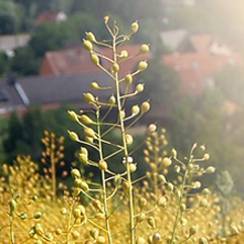
<?xml version="1.0" encoding="UTF-8"?><item href="/news/2022-12-helping-an-oilseed-take-off-as-a-sustainable-fuel-sourced.aspx" dsn="blogs"><homehero>true</homehero><unit>Biochemistry,College of Natural Science</unit><pubDate>12/09/2022</pubDate><title>Helping an oilseed take off as a sustainable fuel source</title><description><p>MSU researchers are working to clear the runway for a new source of cleaner, more sustainable biodiesel and jet fuels derived from a relative of cabbage and cauliflower. With $2 million in funding from the U.S. Department of Energy, MSU scientists, including College of Natural Science biochemist Erich Grotewold, are helping unravel the complex genetics of a plant named <em>Camelina sativa</em> to better equip researchers to improve the plant’s oilseed yield and establish it as a more viable alternative to current petroleum-based fuels that meet the unique demands of air travel.</p></description><author>Val Osowski</author><hero-image><img src="/_assets/images/news/2022/2022-12-helping-an-oilseed-take-off-as-a-sustainable-fuel-source.banner_plane_sativa.jpg" alt="MSU scientists have landed a $2 million Department of Energy grant to improve the oilseed yield of Camelina sativa, a common plant that could provide cleaner jet fuels and teach us about other important crops."/></hero-image><image><img src="/_assets/images/news/2022/preview2022-12-helping-an-oilseed-take-off-as-a-sustainable-fuel-source.banner_plane_sativa.jpg" alt="MSU scientists have landed a $2 million Department of Energy grant to improve the oilseed yield of Camelina sativa, a common plant that could provide cleaner jet fuels and teach us about other important crops."/></image><tags><tag>Camelina satvia</tag><tag>biofuel</tag><tag>faculty</tag><tag>research</tag></tags></item>