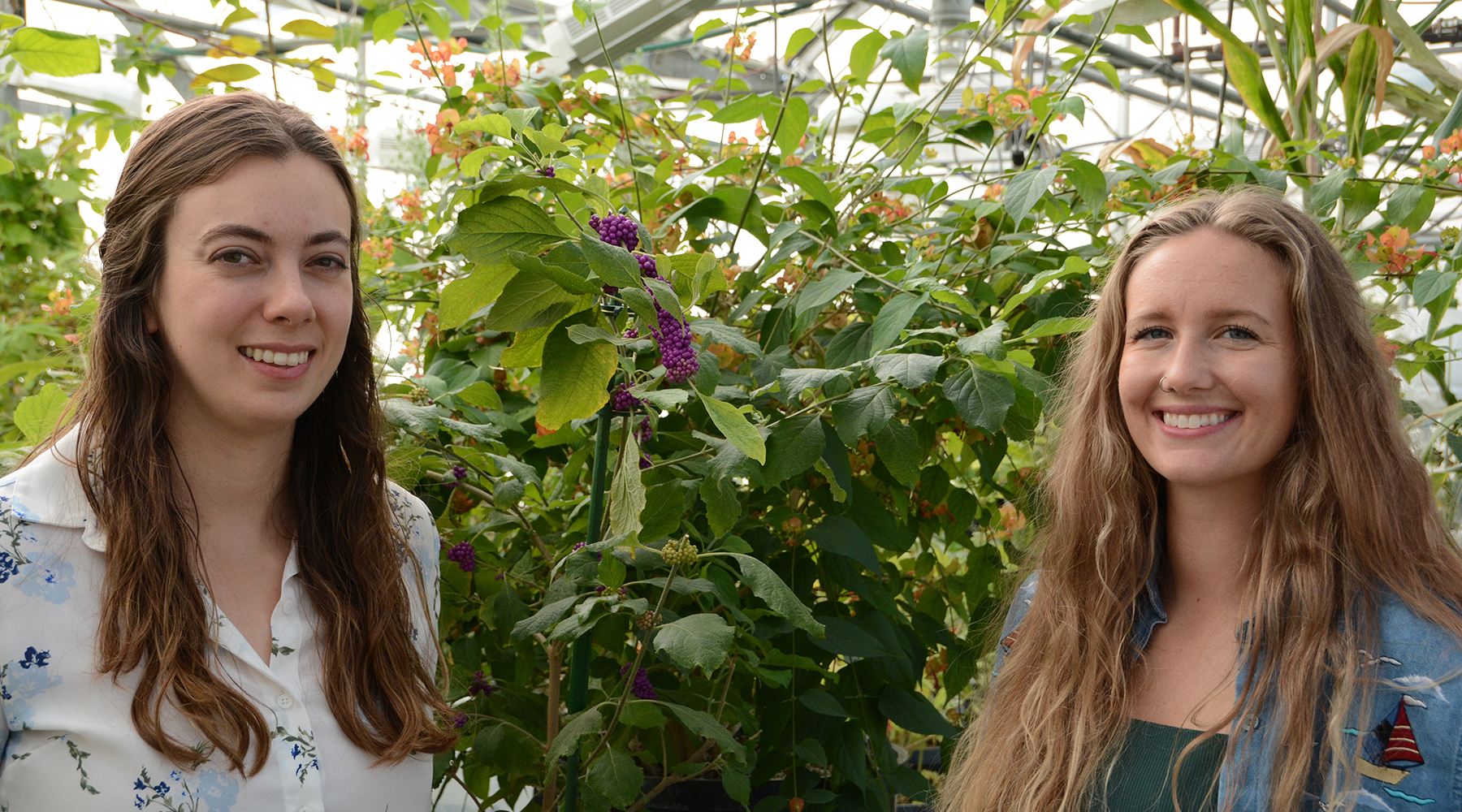
<?xml version="1.0" encoding="UTF-8"?><item href="/news/2023-01-msu-researchers-uncover-new-potential-for-ancient-mint-plants.aspx" dsn="blogs"><homehero>true</homehero><unit>Biochemistry,College of Natural Science,Plant Biology</unit><pubDate>01/23/2023</pubDate><title>MSU researchers uncover new potential for ancient mint plants</title><description><p>MSU synthetic biologist Björn Hamberger and graduate students Emily Lanier and Abigail Bryson have traced the evolution of mint genomes for potential future applications that range from medicines, pesticides and antimicrobials. Their research was published in the journal <em>Nature Communications</em>.</p></description><author>Val Osowski</author><hero-image><img src="/_assets/images/news/2023/2023-01-msu-researchers-uncover-new-potential-for-ancient-mint-plants.banner.lanier%20and%20bryson.jpg" alt="Buildiing on earlier research, MSU graduate students Emily Lanier (left) and Abigail Bryson (right) discovered how several genomes of the mint family have evolved and how these chemistries have emerged over the past 60 to 70 million years. "/></hero-image><image><img src="/_assets/images/news/2023/preview2023-01-msu-researchers-uncover-new-potential-for-ancient-mint-plants.banner.lanier%20and%20bryson.jpg" alt="Buidling on earlier research, MSU graduate students Emily Lanier (left) and Abigail Bryson (right) discovered how several genomes of the mint family have evolved and how these chemistries have emerged over the past 60 to 70 million years. "/></image><tags><tag>Molecular Plant Sciences</tag><tag>biotechnology applications</tag><tag>bmb</tag><tag>metabolic diversity</tag><tag>plant biology</tag><tag>plant metabolism</tag></tags></item>