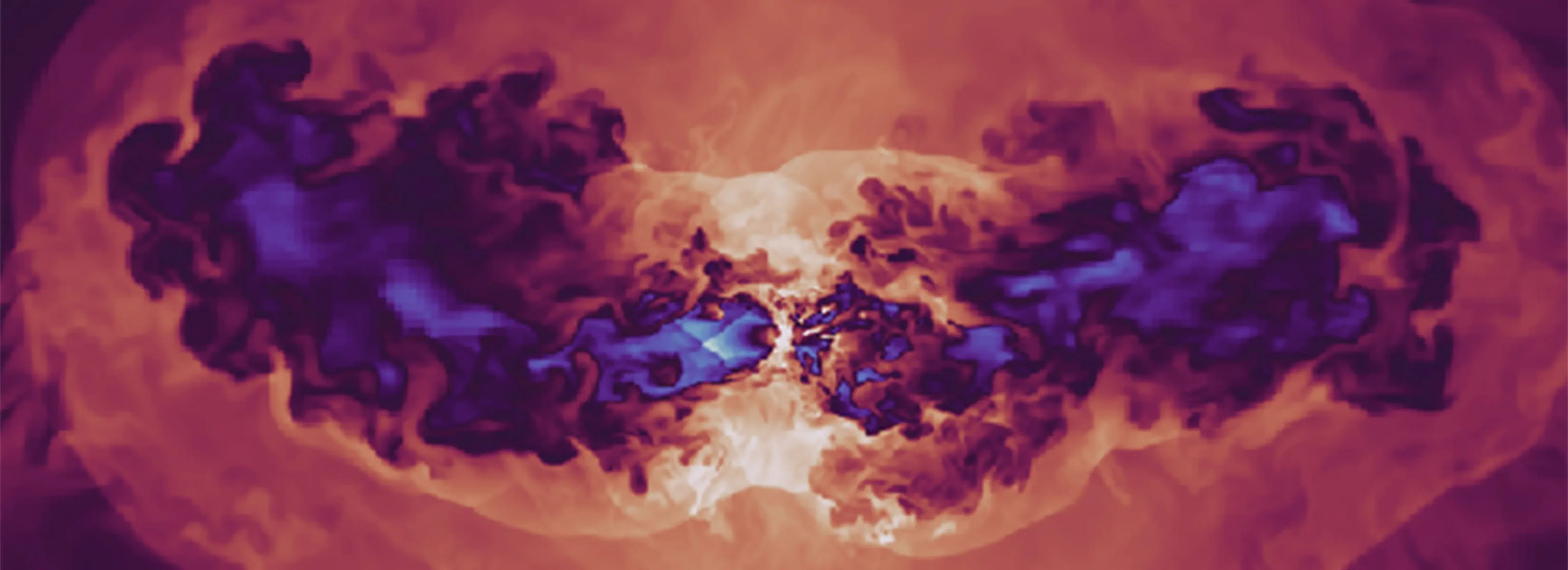
<?xml version="1.0" encoding="UTF-8"?><item href="/news/2023-03-msu-is-taking-the-worlds-fastest-supercomputer-to-the-final-frontier.aspx" dsn="blogs"><homehero>true</homehero><unit>CMSE,College of Natural Science,Physics &amp; Astronomy</unit><pubDate>03/16/2023</pubDate><title>MSU is taking the world's fastest supercomputer to the final frontier</title><description><p>Michigan State University is leading pioneering research on the world’s fastest supercomputer, thanks to a new grant from the U.S. Department of Energy. The DOE has awarded an MSU-led team 1.3 million node hours of computation time on the Frontier supercomputer (Frontier is made up of 9,400 computing nodes, and one hour of computing on a single node is equal to one “node hour”). Lead researcher Brian O’Shea and the multi-institution team will harness the power of Frontier to better understand galaxies.</p></description><author>Matt Davenport</author><hero-image><img src="/_assets/images/news/2023/2023-03-msu-is-taking-the-worlds-fastest-supercomputer-to-the-final-frontier.banner.galaxy%20simulation.jpg" alt="This snapshot of a simulated galaxy gives a preview of the studies MSU researchers and their colleagues will launch on Frontier, the world’s fastest supercomputer. These new studies will be performed at higher resolution and include more of the physics at work in galaxy formation and evolution. "/></hero-image><image><img src="/_assets/images/news/2023/preview2023-03-msu-is-taking-the-worlds-fastest-supercomputer-to-the-final-frontier.banner.galaxy%20simulation.jpg" alt="This snapshot of a simulated galaxy gives a preview of the studies MSU researchers and their colleagues will launch on Frontier, the world’s fastest supercomputer. These new studies will be performed at higher resolution and include more of the physics at work in galaxy formation and evolution. "/></image><tags><tag>Physics and Astronomy</tag><tag>black holes</tag><tag>cmse</tag><tag>galaxy exploration</tag><tag>supercomputers</tag></tags></item>