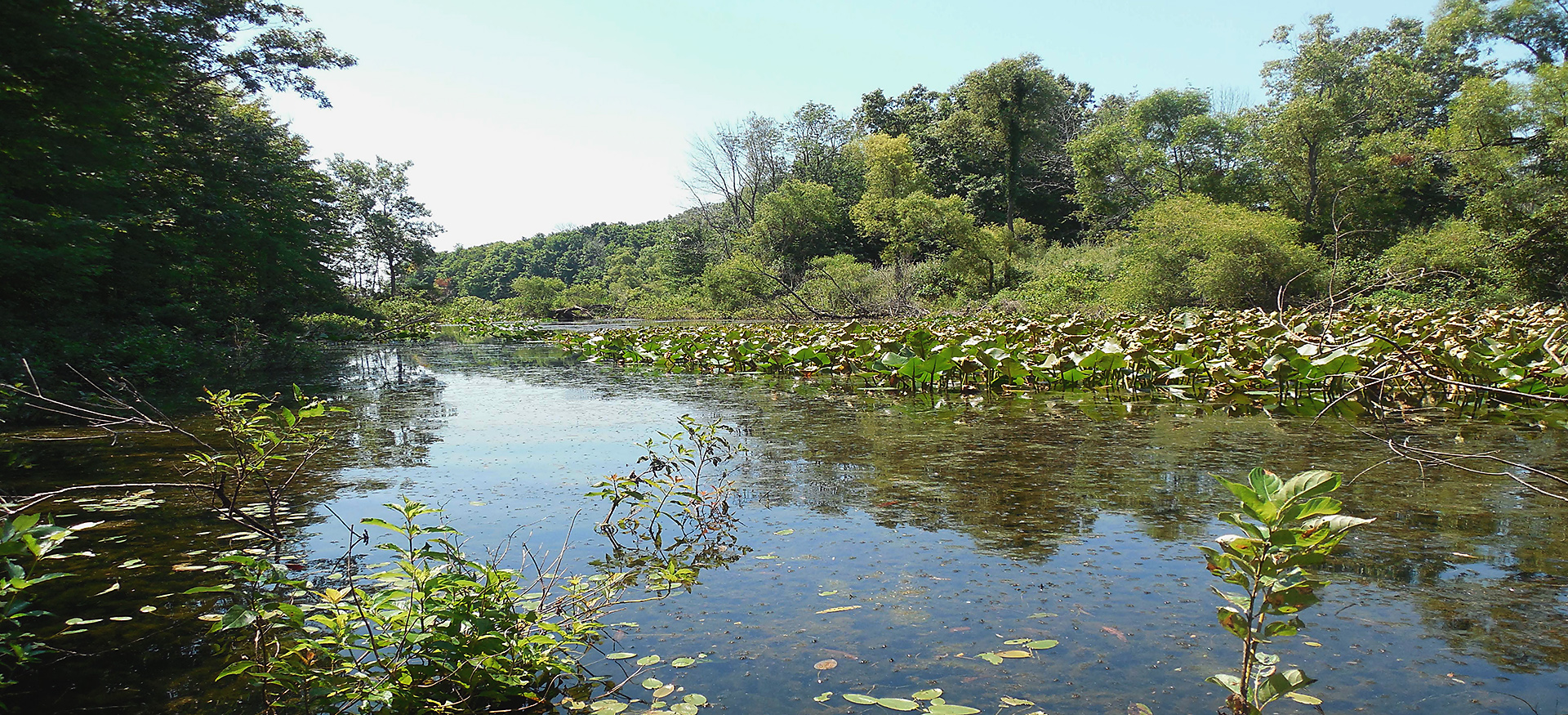
<?xml version="1.0" encoding="UTF-8"?><item href="/news/2023-04-mixing-theory-observation-to-envision-warmer-world.aspx" dsn="blogs"><homehero>true</homehero><unit>College of Natural Science,EEB,Integrative Biology,Kellogg Biological Station</unit><pubDate>04/26/2023</pubDate><title>Mixing theory, observation to envision warmer world</title><description><p>Climate changes are conjuring a whirlwind ride that seems to present some creatures opportunities to thrive. Scientists scripting supercharged scenarios caution that the difference between seasonal coping and long-term adaption is vast – and tricky to predict. Michigan State University biologists are studying damselflies to understand how other species will respond to a warmer world. Their findings were recently published in the <em>Proceedings of the Royal Society B</em>.</p></description><author>Sue Nichols</author><hero-image><img src="/_assets/images/news/2023/2023-04-mixing-theory-observation-to-envision-warmer-world.banner.pond.jpg" alt="A photo of Pond 9 at Lux Arbor Reserve, Delton, Mich. Damselflies live on the submerged aquatic plants that you can see growing just under the surface of the water. "/></hero-image><image><img src="/_assets/images/news/2023/preview2023-04-mixing-theory-observation-to-envision-warmer-world.banner.pond%209.jpg" alt="Damselflies live on the submerged aquatic plants that you can see growing just under the surface of the water at Pond 9 at the Lux Arbor Reserve. "/></image><tags><tag>IBIO</tag><tag>KBS</tag><tag>adaptive evolution</tag><tag>climate change</tag><tag>damselflies</tag><tag>eeb</tag><tag>predator-prey simulation model</tag><tag>thermal ecology</tag></tags></item>