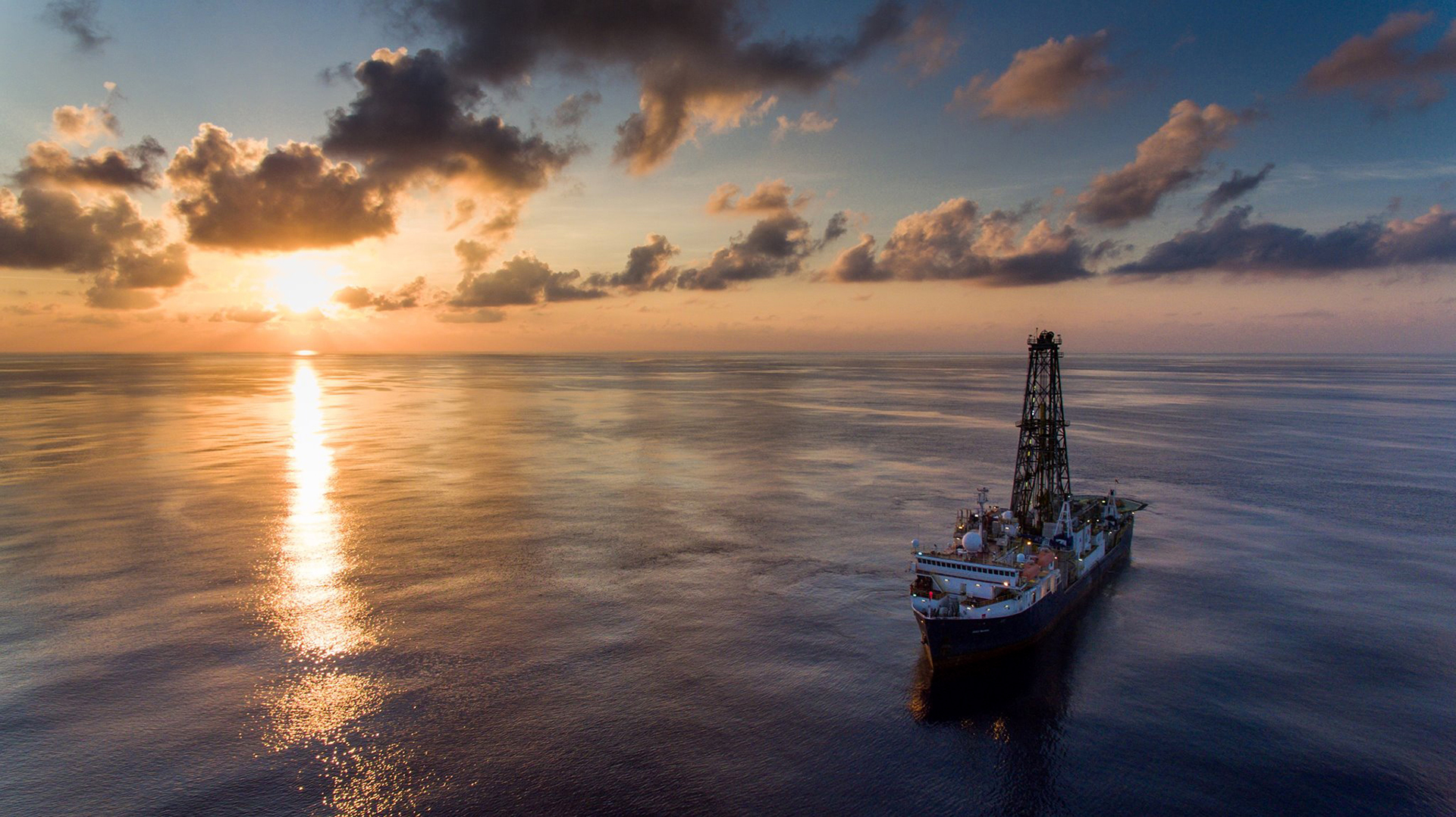
<?xml version="1.0" encoding="UTF-8"?><item href="/news/2023-07-ask-the-expert-visiting-alternative-earths-through-the-oceans-past.aspx" dsn="blogs"><homehero>true</homehero><unit>College of Natural Science,EES</unit><pubDate>07/13/2023</pubDate><title>Ask the expert: Visiting 'alternative Earths' through the ocean's past</title><description><p>MSU researcher Dalton Hardisty uses ocean sediment to dive deep into ancient Earth’s coupled evolution of life and ocean chemistry. He’s currently part of an international research collaboration that recently published work in the prestigious journal Nature, sharing a new approach for studying important chemical and biochemical processes in the Earth’s prehistoric past.</p></description><highlights><ul>
<li><span>Paleoceanographers are researchers who can examine ocean sediment like a record book that stretches back nearly 4 billion years.</span></li>
<li><span>The evolution of photosynthesis has had major changes on ocean chemistry, but also the evolution of life in certain time periods.</span></li>
<li><span>Phosphorus is thought to be one of the limiting nutrients for photosynthesis through a lot of Earth’s history.</span></li>
<li><span>Ancient Earth can tell us about planetary conditions that sustain life that are very different from what we see today.</span></li>
</ul></highlights><author>Matt Davenport</author><hero-image><img src="/_assets/images/news/2023/2023-07-ask-the-expert-visiting-alternative-earths-through-the-oceans.banner.sunset.jpg" alt="Scientific drill ships, such as the JOIDES Resolution seen here, extract samples from the ocean floor that help researchers like Dalton Hardisty of Michigan State University reveal Earth’s prehistoric past. Credit: Shuhao Xie/International Ocean Discovery Program and JOIDES Resolution Science Operator"/></hero-image><image><img src="/_assets/images/news/2023/preview2023-07-ask-the-expert-visiting-alternative-earths-through-the-oceans.banner.sunset.jpg" alt="The Earth is 4.5 billion years old, and, during that time, it has seen some things. Life has been a part of most of that history, but what life has looked like has changed dramatically over the eons."/></image><tags><tag>Ask the expert</tag><tag>Earth and Environmental Sciences</tag><tag>Earth evolution</tag><tag>ocean sediments</tag></tags></item>