trueDiscovery Science,Health Science and Innovation02/26/2024MSU, Penn State researchers team up for microbiome discoveries
Thanks to a bit of serendipity and a cooperative spirit, MSU researchers helped uncover a previously unknown way that the microbes living in our gut help our overall health.
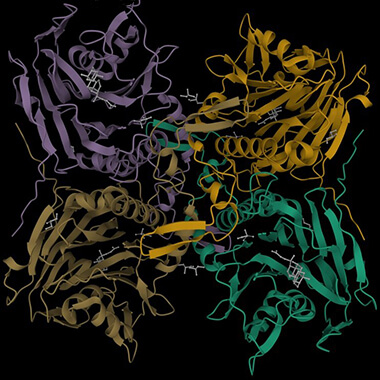
In a new paper published in the journal Nature, Michigan State University researchers Robert Quinn and Doug Guzior report the discovery of the enzyme responsible for producing microbially conjugated bile acids, some of the most abundant and crucial molecules in our gut.
The researchers also discovered this enzyme has a previously unknown reverse activity, allowing gut bacteria to produce their own bile acids in an act of “molecular mimicry.”
The MSU breakthrough is published alongside a complementary paper from Pennsylvania State University, resulting in a land-grant collaboration with exciting implications for full-body health and drug discovery.