<?xml version="1.0" encoding="UTF-8"?><item href="/news/2024-04-building-toward-artificial-cells.aspx" dsn="blogs"><homehero>true</homehero><categories/><broadcast>bmb,prl</broadcast><articlePreview/><pubDate>04/01/2024</pubDate><title>Life without lipids: Building toward 'artificial cells'</title><description><span style="font-weight: 400;">Spartan researchers join a nationwide team to create a new way to design cell-sized microfactories that could help make medicines, biofuels and more.</span></description><highlights><br/>
<ul>
<li aria-level="1"><span style="font-weight: 400;">Researchers from Michigan State University, Lawrence Berkeley National Laboratory, Pennsylvania State University and the University of Delaware teamed up to create a new way to design cell-sized reactors.</span></li>
</ul>
<ul>
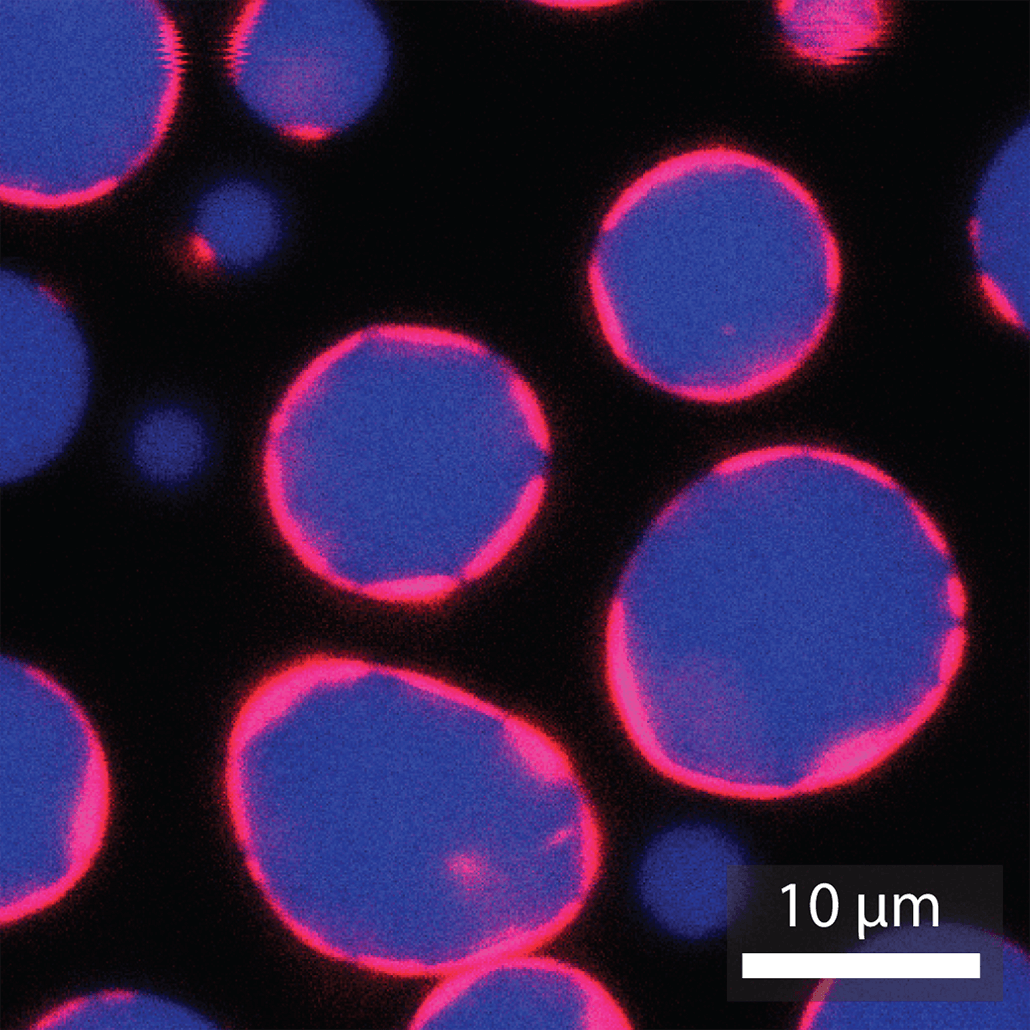
<li style="font-weight: 400;" aria-level="1"><span style="font-weight: 400;">Drawing inspiration from bacteria and forces at work in the biological world, the team created protein-coated shells that can be packed with active cargo including enzymes and RNA</span><strong>.</strong></li>
</ul>
<ul>
<li><span style="font-weight: 400;">Published in the journal </span><a href="https://onlinelibrary.wiley.com/doi/10.1002/smll.202308390" target="_blank" rel="noopener"><span style="font-weight: 400;">Small</span></a><span style="font-weight: 400;">, these “artificial cells” could open new paths to myriad useful things, including medicines, biofuels and a deeper understanding of fundamental biological principles. </span></li>
</ul></highlights><author>Matt Davenport</author><hero-image><img src="https://natsci.msu.edu/_assets/images/news/2024/2024-04-artificial-cells-single%20phase.png" alt="Several blue droplets ringed by red circles fluoresce against a black background in a microscope image. A scale bar shows the droplets range between about 10 and 20 micrometers in diameter."/></hero-image><image><img src="/_assets/images/news/2024/2024-04-artificial-cells-preview.png" alt="Several blue droplets ringed by red circles fluoresce against a black background in a microscope image. A scale bar shows the droplets range between about 10 and 20 micrometers in diameter."/></image></item>