<?xml version="1.0" encoding="UTF-8"?><item href="/news/2024-04-the-nova-in-our-galactic-backyard.aspx" dsn="blogs"><homehero>true</homehero><unit>Physics &amp; Astronomy</unit><broadcast>pa</broadcast><articlePreview/><pubDate>05/01/2024</pubDate><title>Ask the expert: The nova in our 'galactic backyard'</title><description>Elias Aydi shares the story of a star explosion that will soon light up the night sky</description><highlights><br/>
<ul>
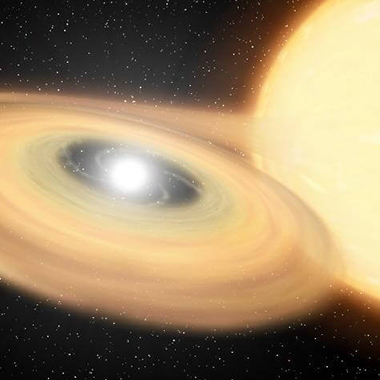
<li>Elias Aydi researches novae — the plural of stellar explosions known as nova — at Michigan State University. Within the next year or so, people all over the Northern Hemisphere will have a chance to see the brightest nova in the night sky since 1942.</li>
</ul>
<ul>
<li>Aydi explains what a nova is, how it differs from a supernova and why this event is special, even for the casual stargazer.</li>
</ul>
<ul>
<li>The nova also presents a unique opportunity for Aydi and the astrophysics community to learn more about how the cosmos work.</li>
</ul></highlights><author>Matt Davenport</author><hero-image><img src="" alt=""/></hero-image><image><img src="/_assets/images/news/2024/2024-04-nova-nova-preview.jpg" alt="A white dwarf star (center) pulls matter off its much larger yellow, companion star. An accretion disc forms around the white dwarf and, eventually, the material in this disc will undergo a thermonuclear explosion."/></image></item>