<?xml version="1.0" encoding="UTF-8"?><item href="/news/2024-05-new-grant-supports-fight-against-gut-pain.aspx" dsn="blogs"><homehero>true</homehero><categories/><broadcast>physiology</broadcast><articlePreview/><pubDate>05/21/2024</pubDate><title>New grant supports fight against gut pain</title><description><span style="font-weight: 400;">NIH awards nearly $1.8 million to MSU to explore the cellular basis of visceral pain</span></description><highlights><br/>
<ul>
<li style="font-weight: 400;" aria-level="1"><span style="font-weight: 400;">The National Institutes of Health have awarded a nearly $1.8 million grant to an MSU research team to continue delving into the cellular basis of visceral gut pain, the most common symptom of gastrointestinal problems.</span></li>
</ul>
<ul>
<li style="font-weight: 400;" aria-level="1"><span style="font-weight: 400;">Led by Brian Gulbransen, the project holds promise for the development of novel therapeutics that could help alleviate gut pain, a condition currently lacking in effective treatments.</span></li>
</ul>
<ul>
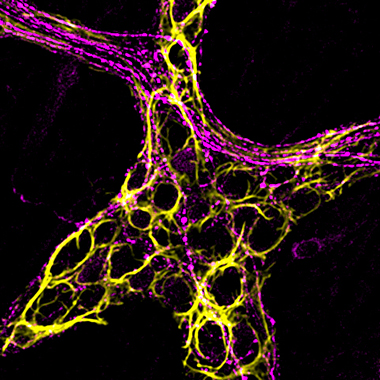
<li style="font-weight: 400;" aria-level="1"><span style="font-weight: 400;">Working with mouse models, Gulbransen’s team will further explore the contributions of cells known as glia to gut pain in the context of variables including sex, stress and previous experiences with inflammation in the gut.</span></li>
</ul></highlights><author>Samantha Brichta</author><hero-image><img src="" alt=""/></hero-image><image><img src="/_assets/images/news/2024/2024-05-gut-pain-preview.jpg" alt="A micrograph shows a network of looping yellow lines intertwined with gently curved magenta traces. These show the position of glial cells (yellow) and neurons (magenta) in a mouse colon sample."/></image></item>