<?xml version="1.0" encoding="UTF-8"?><item href="/news/2024-07-how-staph-slips-around.aspx" dsn="blogs"><homehero/><categories>Discovery Science,Health Science and Innovation</categories><broadcast>mgi</broadcast><articlePreview/><pubDate>07/25/2024</pubDate><title>How staph slips around</title><description><span style="font-weight: 400;">Research reveals conditions that accelerate the spread of infectious bacteria</span></description><highlights><ul>
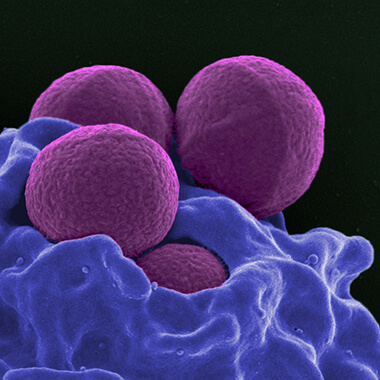
<li aria-level="1"><span style="font-weight: 400;">Research led by Gemma Reguera of Michigan State University has shown how immotile staphylococcus bacteria can slip through different biological environments to potentially spread infections.</span></li>
</ul>
<ul>
<li aria-level="1"><span style="font-weight: 400;">A combination of proteins from a host’s mucus membrane and peptides made by the bacteria act as lubricants that accelerate the spread of bacterial colonies.</span></li>
</ul>
<ul>
<li aria-level="1"><span style="font-weight: 400;">The results, published in the journal mBio, could help researchers develop new ways of slowing or preventing the spread of dangerous bacteria, such as MRSA.</span></li>
</ul></highlights><author>Matt Davenport</author><hero-image><img src="" alt=""/></hero-image><image><img src="/_assets/images/news/2024/2024-07-staph-lubricants-preview-update.jpg" alt="Four round MRSA cells are shown in purple in a colorized electron micrograph. "/></image></item>