- Discovery Science,Health Science and Innovation,Plant Scienceschemistry09/05/2024Ask the expert: How — and why — do you harvest isotopes?Katharina Domnanich is helping FRIB prepare to provide a bounty of isotopes useful for medicine, plant science and more
- Katharina Domnanich is an assistant professor working at the forefront of discovery at the Facility for Rare Isotope Beams, or FRIB.
- While FRIB creates isotopes the world has never seen before, it will also create isotopes that researchers are already studying for applications in medicine, plant science and more.
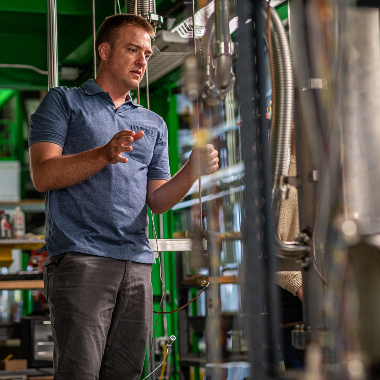
- Domnanich is helping build a laboratory that will help accelerate those studies by “harvesting” those isotopes and, while doing so, she’s also exploring new research areas to help support FRIB’s mission.
Matt Davenport![]()