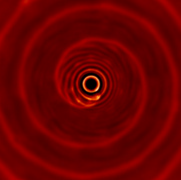
<?xml version="1.0" encoding="UTF-8"?><item href="/news/in-the-wake-of-a-dying-sun.aspx" dsn="blogs"><homehero/><unit>Faculty &amp; Staff,Research,College of Natural Science,Physics &amp; Astronomy</unit><pubDate>03/17/2022</pubDate><title>In the wake of a dying sun</title><description><p>Spartan astronomer Elias Aydi is helping show what our solar system and others may look like when they enter their final acts. Aydi is the first author of the study, which was a collaboration with Shazrene Mohamed, a University of Miami astrophysicist with the South African Astronomical Observatory. The duo found that interactions between a red giant star and a nearby substellar object will create distinct structured patterns, such as spirals and arcs, in the environment around the star. The work was recently accepted for publication in the peer-reviewed <em>journal Monthly Notices of the Royal Astronomical Society</em>.</p></description><author/><hero-image><img src="https://natsci.msu.edu/sites/_natsci/cache/file/CC7323AA-129D-4839-82A2D7D6965A6F47_newsarticlehero.jpg" alt="Hero image"/></hero-image><image><img src="https://natsci.msu.edu/sites/_natsci/cache/file/CC7323AA-129D-4839-82A2D7D6965A6F47_medium.jpg" alt="Hero image"/></image><tags><tag>computer simulations</tag><tag>postdoctoral researchers</tag><tag>red giants</tag><tag>research</tag><tag>solar systems</tag><tag>star death</tag></tags></item>