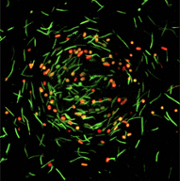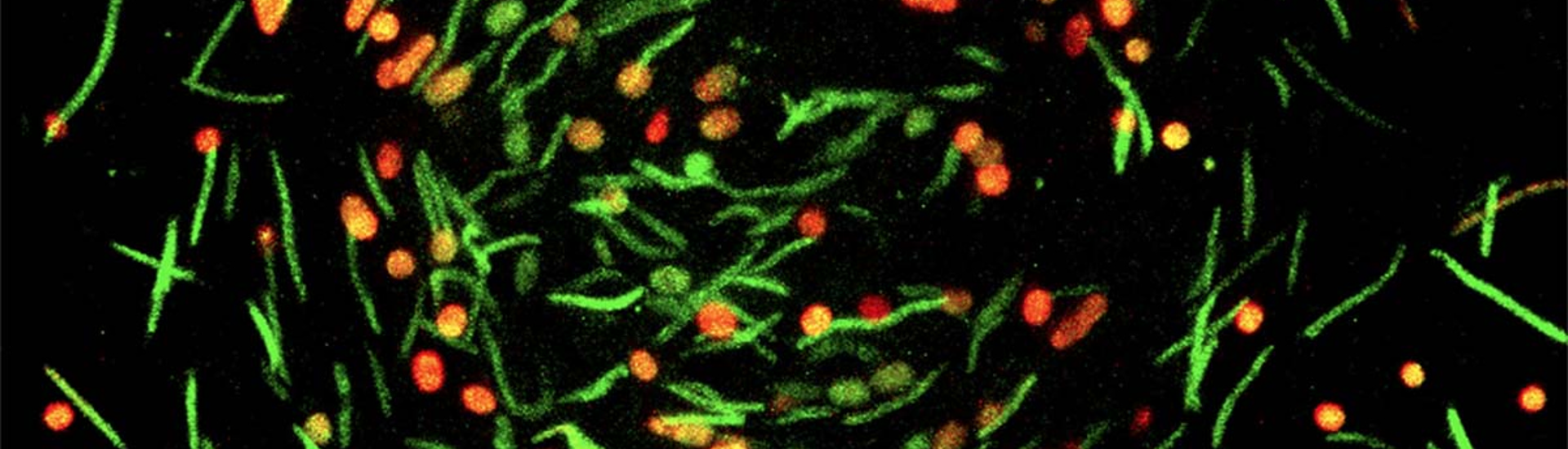
<?xml version="1.0" encoding="UTF-8"?><item href="/news/learning-how-nature-dances.aspx" dsn="blogs"><homehero>true</homehero><unit>Faculty &amp; Staff,Research,Biochemistry,College of Natural Science,Microbiology</unit><pubDate>11/08/2021</pubDate><title>Learning how nature 'dances'</title><description><p>Long ago in Earth’s history, individual cells began to communicate and coordinate with one another. Thanks to this and a few billion years of evolution, humans can now gather in lecture halls to share ideas about how to study this communication and its wide-ranging implications.MSU scientists Lee Kroos and Yann Dufour now have a paper, published online Nov. 5 in the Proceedings of the National Academy of Sciences, in which they took a deep look at how single cells work together to choreograph collective behavior. In particular, the team looked at a bacterial species known as <em>Myxococcus xanthus</em> to tease out the basic rules of the dances bacteria do to survive, thrive and impact humanity, for better or worse.</p></description><author/><hero-image><img src="https://natsci.msu.edu/sites/_natsci/cache/file/ECD45E70-7ED7-4F6F-B4E2AFE68A4AF0E7_newsarticlehero.jpg" alt="Hero image"/></hero-image><image><img src="https://natsci.msu.edu/sites/_natsci/cache/file/ECD45E70-7ED7-4F6F-B4E2AFE68A4AF0E7_medium.jpg" alt="Hero image"/></image><tags><tag>M. xanthus</tag><tag>cell behavior</tag><tag>cell communication</tag><tag>faculty</tag><tag>research</tag></tags></item>