This paleontologist studies a world before dinosaurs
Katie Maloney honored for her work searching for Earth's earliest complex life
When Katie Maloney says she’s a paleontologist, most people picture Laura Dern in the movie “Jurassic Park.” They assume she spends hours under the hot sun digging up the prehistoric bones of raptors, pteranodons and brachiosauruses.
But Maloney is searching for fossils smaller than dinosaurs — and much older.
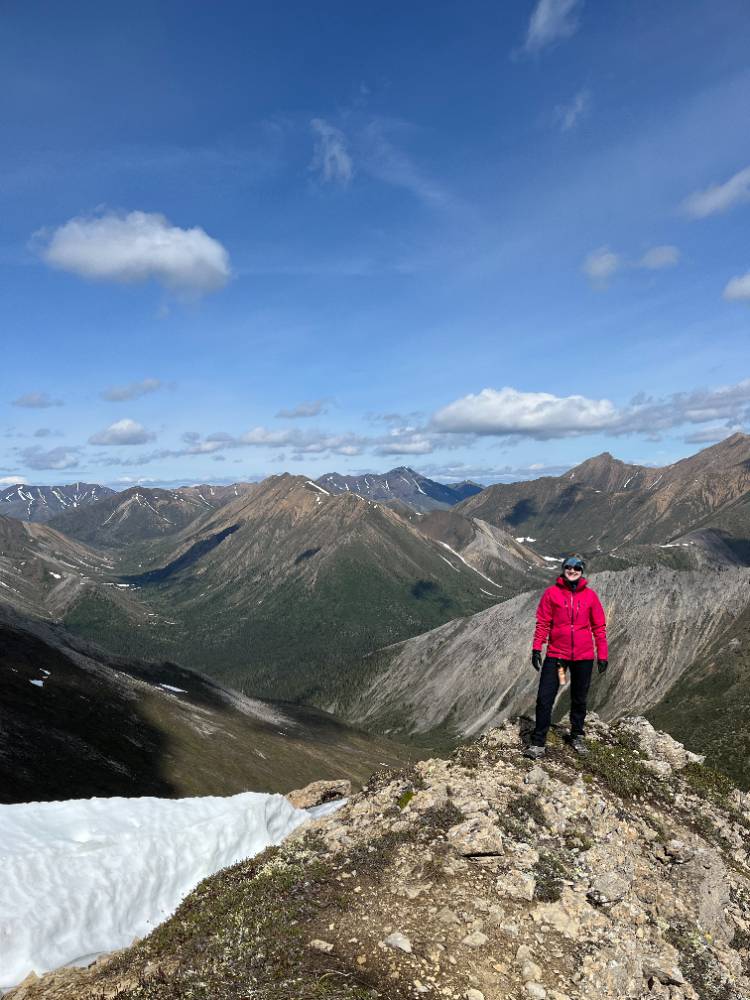
The Michigan State University assistant professor is on a mission to find the earliest ancestors of plants, animals and fungi. In her first year at MSU’s Department of Earth and Environmental Sciences, she’s already helped publish a paper revealing that photosynthesis emerged on Earth 1 billion years earlier than scientists previously thought. She’s traveled to far-flung sites around the world to hunt for fossils that capture the moment life moved from single cells to the complex organisms we know today.
And this summer, she was honored for her accomplishments as the Doris M. Curtis Outstanding Woman in Science.
The award, given by the Geological Society of America, was announced this summer and will be presented this fall in Colorado. Each year, the award recognizes a woman whose Ph.D. research has made a major impact on the geosciences.
“I was honored and surprised to receive this award,” Maloney said. “There are many people on that list of outstanding women who have won this award before that I look up to and respect.”
Maloney was nominated for the award by a group of her former mentors. They remember her as a bright, promising student with a passion not only for geology, but for teaching and communicating the science.
“I supported Katie’s nomination for this award because she is a respected, well-rounded and conscientious member of the Earth science community,” said Galen Halverson, one of Maloney’s supervisors at McGill University.
Iceland v. organic chemistry
Like many other geologists, Maloney was converted to the field during her undergraduate years. She’d taken a geology class but was also toying with the idea of medical school. Then, in her second year, she faced a choice — fly to Iceland for a geology class or suffer through a second semester of organic chemistry.
She went to Iceland and never looked back.
Besides the perk of a trip, Maloney was fascinated by how many fossils have yet to be uncovered.
“I realized there’s still so much we don’t know about the recent past of our Earth,” she said. “There are still lots of big mysteries to dive into in the fossil record.”
Today, Maloney still travels to remote locations that can only be accessed by helicopter to hunt for fossils — the Yukon, Montana and even Michigan’s Upper Peninsula. Fossils you can see with the naked eye are usually too large for her taste. She’s looking for microfossils that sometimes can only be seen by dissolving the rock in a weak vinegar solution and examining the carbonates under a microscope.
Microfossils hidden in rocks help tell the story of when life evolved from simple cells to the complex plants and animals we know today. Maloney is especially interested in photosynthesizers — anything that uses sunlight to create energy. These organisms release oxygen into the ocean, helping create an environment where animals could eventually thrive.
“We’re looking for those organisms that lay the groundwork for animal life,” Maloney said.
A needle in a haystack
Finding those fossils is no small feat. She usually searches plots where other scientists have successfully found specimens, or near spots where larger fossils were uncovered. But she doesn’t know if her hunt was successful until she gets her samples in the lab.
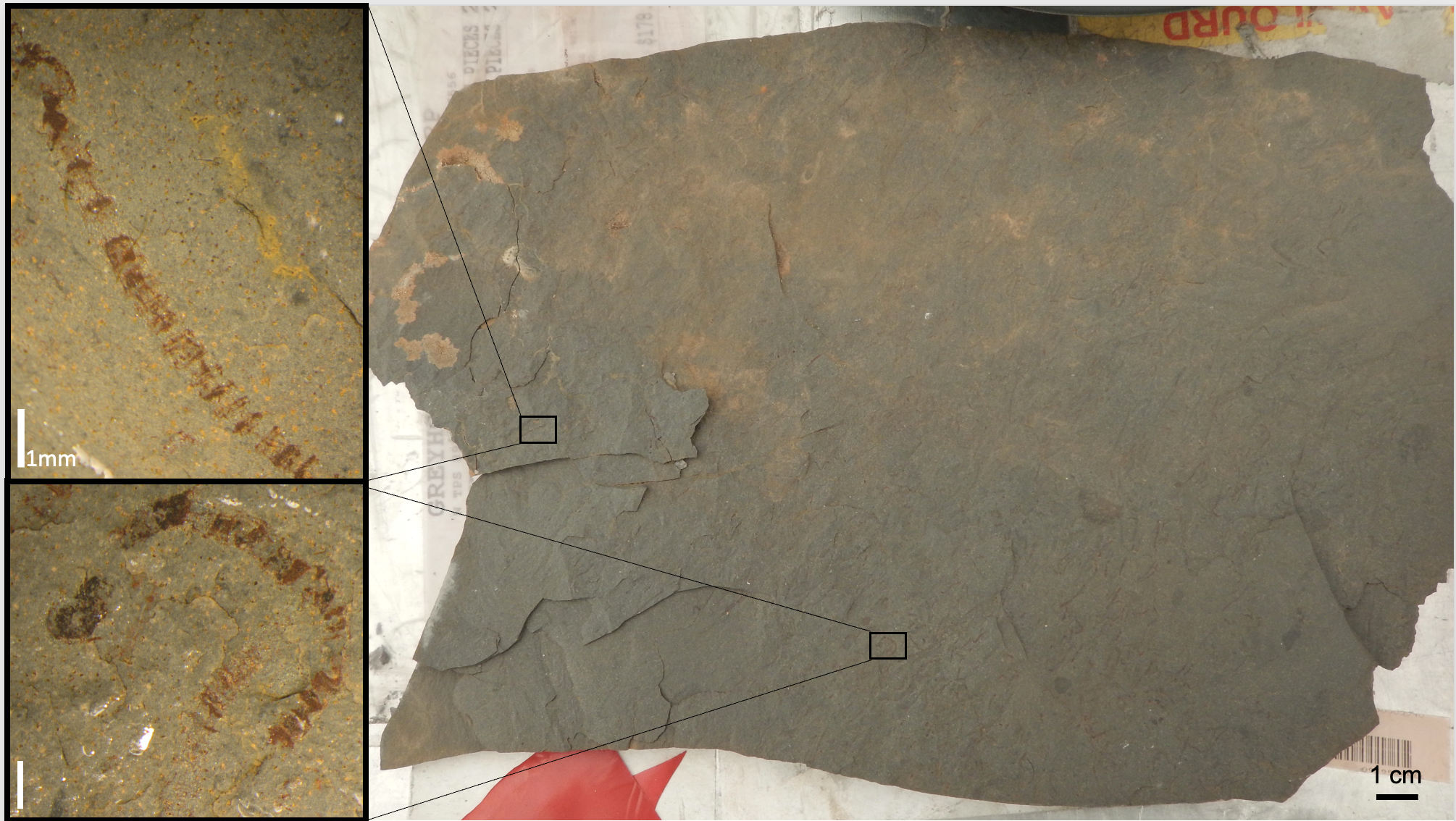
She and her team look for tiny filaments, tubes and blobs in the dissolved rock samples. While they know they’re signs of life, it’s still unclear whether that life is fungi, algae or something else entirely. The more fossils scientists can find, the more questions they can answer about what kind of complex life once lived on Earth, and how they evolved over time.
One fossil hunt during her Ph.D. turned up a macroscopic algae sample. This sample became a key piece of evidence used in an international 2025 paper demonstrating that oxygen-producing photosynthesis emerged nearly a billion years earlier than previously thought.
The same clues that indicate early life on Earth are also put to work in the search for life on other planets. As the Mars rover combs the red planet’s dunes and canyons, it’s looking for proof that life once teemed among the dust.
“We imagine that, in the event we don’t find current life, there are many ways you can find evidence of past life,” Maloney said. “That’s what we’re looking for.”
Even rocks without fossils aren’t wasted. Maloney’s team uses them to map the area’s layers and document where each sample came from, building a detailed rock record of the region.
She also asks questions about why the rocks don’t have fossils in the first place. Was that area not a healthy place for life to thrive? Or was there life, and the chemical environment lacked what it needed to preserve organic carbon?
Catching the fire
Maloney’s passion for geoscience goes beyond her own research. Her second love is helping the next generation catch her enthusiasm for learning how the Earth formed and changed over the years.
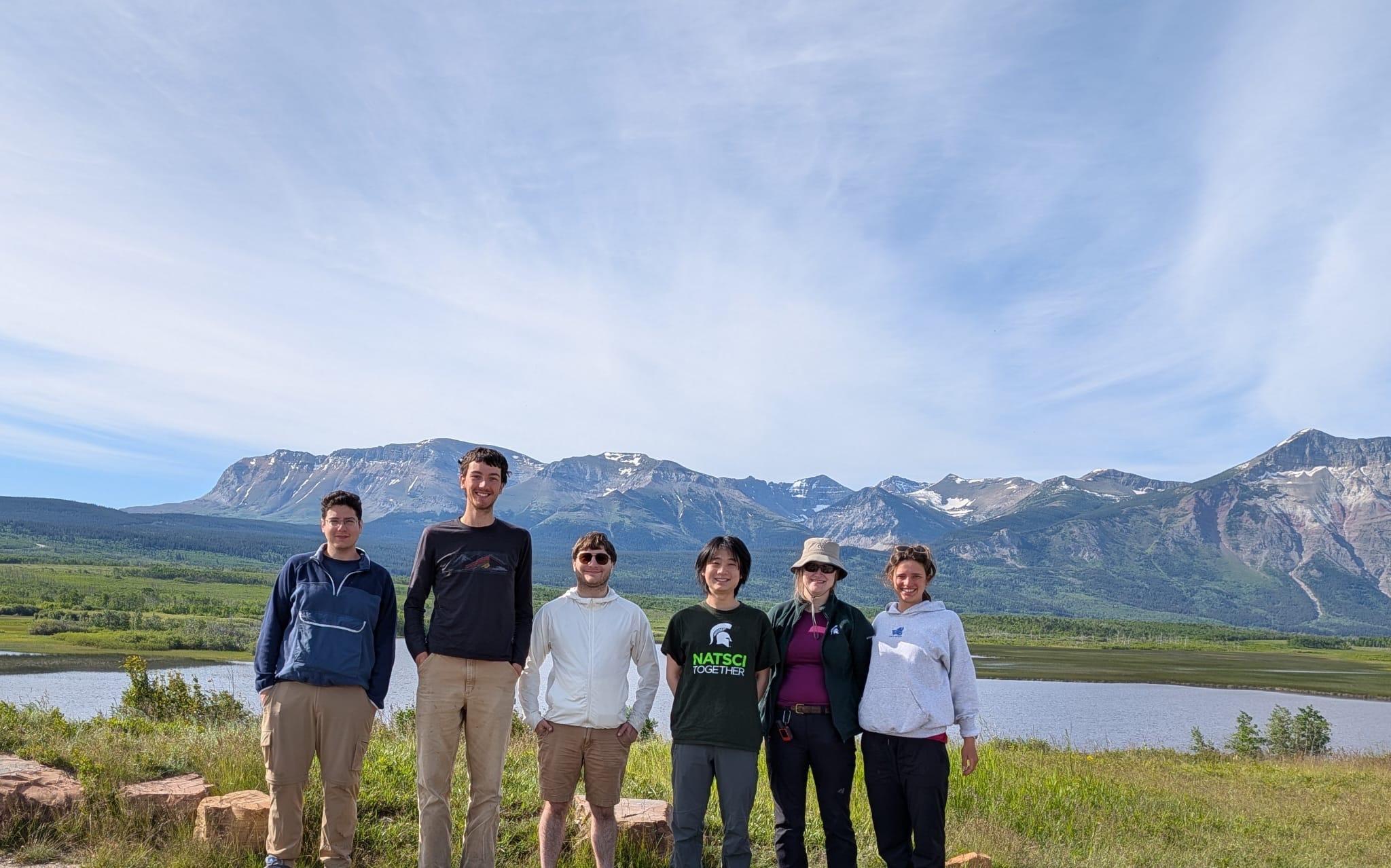
On campus, she teaches paleobiology, where she brings students on field trips to study rocks and challenges them to tap into their creative spirit in class projects. She works alongside undergraduates and graduate students as they begin their science careers.
“Dr. Maloney is a dedicated mentor, having supervised students in my laboratory,” said Marc Laflamme, Maloney’s Ph.D. supervisor at the University of Toronto Mississauga. “She guided the vision of the projects, had students reflect upon relevant literature, held weekly meetings to help them progress through research tasks and reviewed multiple drafts of manuscripts.”
Maloney is early in her career — she’s only been at MSU for a year, and it’s her first faculty position. But nominator Carolyn Elyes, who mentored Maloney at McMaster University, is confident this is only the beginning. Maloney’s Doris M. Curtis Outstanding Woman in Science award is one of many honors Elyes believes she’ll receive.
As for Maloney, she’s just in it for the science. She’s humbled and honored by the award, but that’s not why she does it. Deep down, she’s still the girl who fell in love with rocks back in her undergraduate days — and she’s still chasing the next fossil that could change how we understand life’s earliest chapters.