Hands-on graduate course gives students access to MSU’s most advanced research tools
For graduate students in MGI 991: “Metals in Biology,” the lab is their classroom, and that classroom houses some of the most advanced scientific equipment at Michigan State University. The facility is known as QBEAM, the Quantitative Bio Element Analysis and Mapping center, in MSU’s Elemental Health Institute, or EHI. Its purpose is to study how chemical elements impact biological systems.
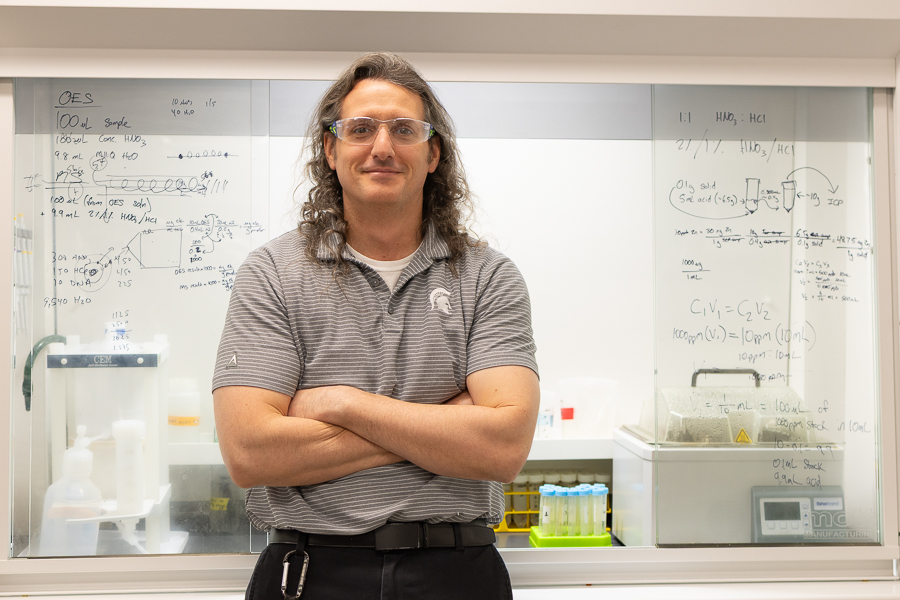
The course is led by two professors from the Department of Microbiology, Genetics, & Immunology: Research Associate Professor Keith MacRenaris and MSU Research Foundation Professor and EHI Founder Tom O’Halloran and emphasizes working directly with sophisticated analytical tools rather than sitting through extended lectures.
That hands‑on structure was intentional. “As important as lectures can be, we get anxious doing your typical lecture-based format,” MacRenaris said. “We would rather use experiential learning and let students loose on instrumentation, as we feel it’s the best way to learn complex analyses.”
A class born from a new Institute
The mission of the EHI is to understand how essential and toxic elements shape biological
processes, from embryonic development and plant physiology to infection, metabolism,
and neurological function. Integrating teaching was always part of the plan.
The course launched in spring 2022, the same semester the institute’s first instruments
arrived on campus. From the outset, MacRenaris and O’Halloran wanted to create a graduate-level
class that emphasized real-world laboratory experience.
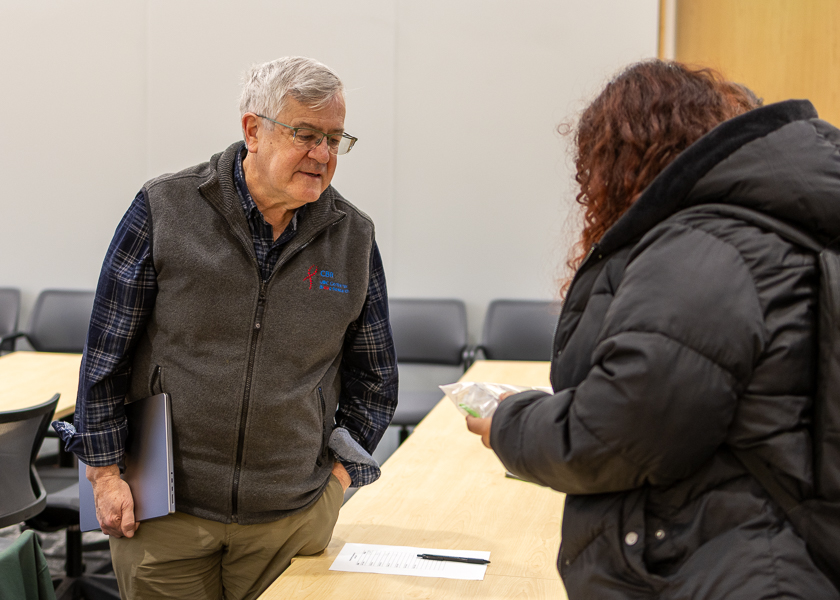
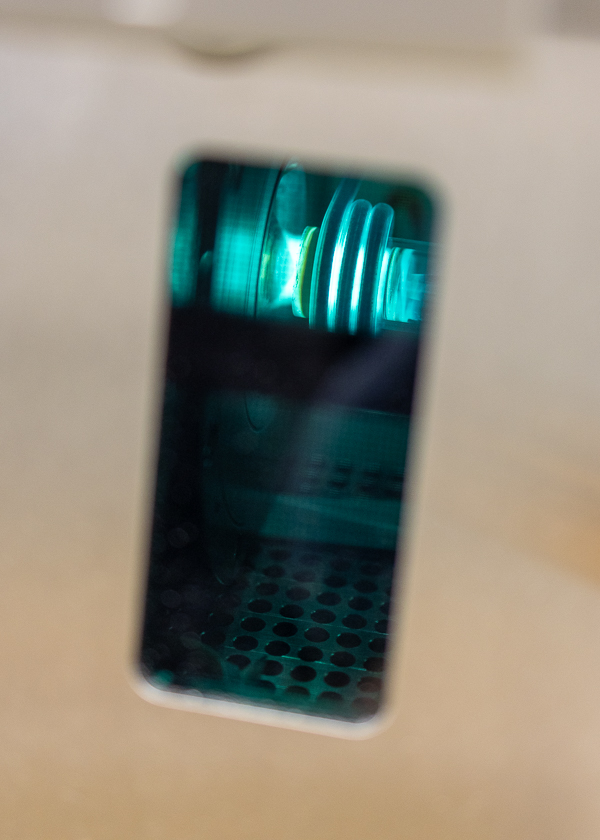
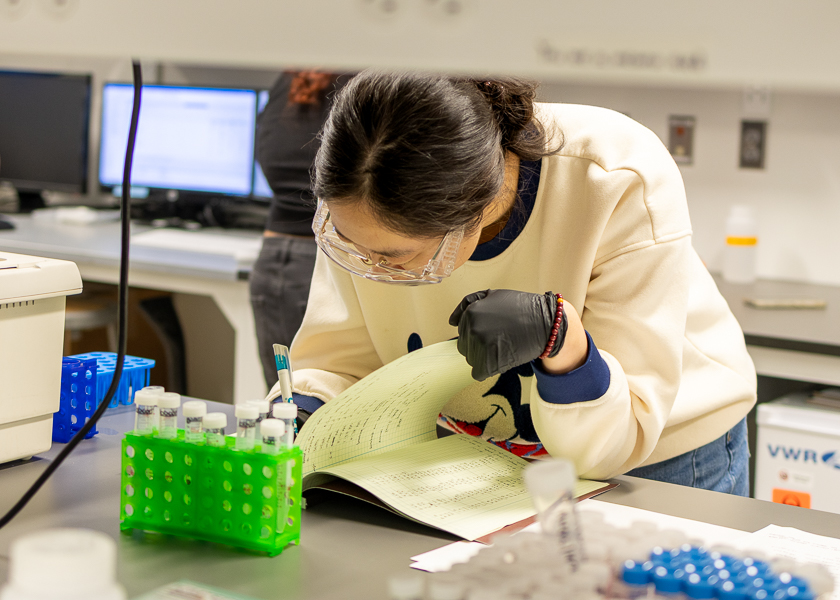
Students start at the most basic level: bringing in water samples from home, campus water fountains, or nearby rivers. They learn how to acidify and prepare those samples and then run them on inductively coupled plasma, or ICP, instruments to measure elements like sodium, potassium, calcium, and trace metals such as lead and arsenic. ICP works by introducing samples into an extremely hot plasma, which breaks the material down into individual atoms. Those atoms are then measured with high precision, producing an elemental profile of the sample.
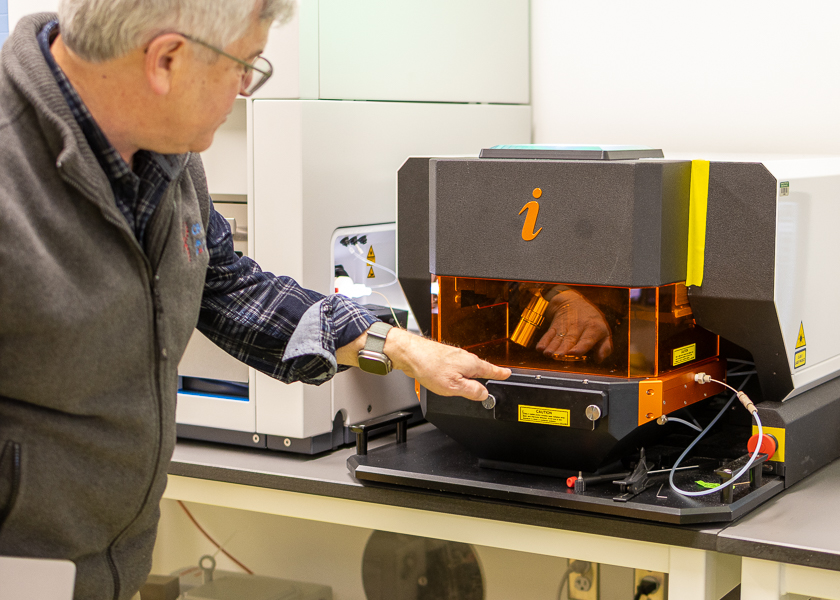
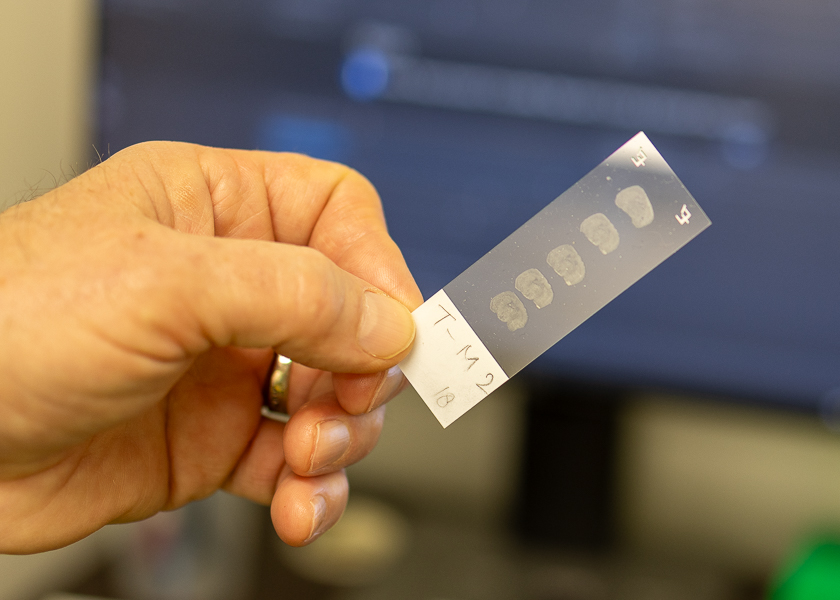
From there, students move on to laser ablation ICP techniques, which allow researchers to map where elements are located within solid samples. A focused laser scans across a thin tissue section, such as a slice of brain, plant tissue, or seed, vaporizing microscopic amounts of material. Each laser pulse is analyzed, creating detailed images that reveal how elements are distributed across the sample. These experiments allow students to connect the elemental measurements directly to biological structure and function.
Students learn through their own research
One of the most impactful aspects of the class is that students are encouraged to bring in samples from their own labs whenever possible. Many have never worked with elemental analysis or analytical chemistry before, so tying the techniques directly to their research makes the material more relevant and engaging, especially when the data can inform thesis projects or ongoing experiments.
Because those projects span a wide range of biological questions, students also draw on expertise from across the EHI research team. MacRenaris and O’Halloran regularly bring in other researchers, including Postdoctoral Scholar Aaron Sue, MGI Research Assistant Professor Bill Hong and Research Associates Niharika Sinha and Kiwon Ok, to help students with specialized experimental design and analysis.
There is a benefit to the EHI as well—in many cases, these class projects become the starting point for ongoing collaborations, with students returning to use the facility as part of their dissertation research. Some have also developed into longer-term collaborations between EHI researchers and MGI labs.
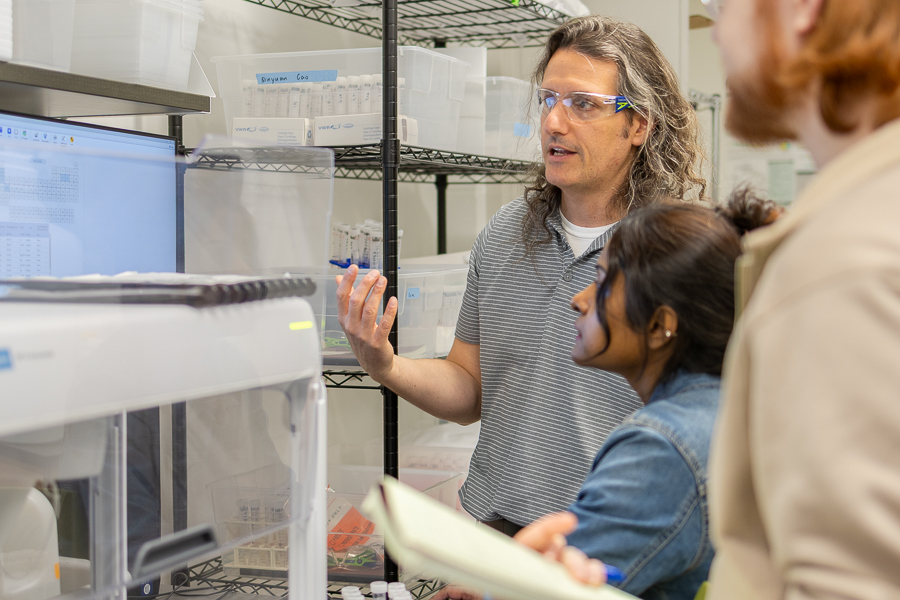
Throughout the semester, MacRenaris and O’Halloran help students think through every step of their projects, from experimental design to instrumentation choices and data interpretation. The class culminates in a short scientific presentation where students outline what they studied, how they applied elemental analysis, and what they learned. Each student receives written feedback on both their slides and their presentation.
The class has evolved significantly since its first iteration, when the lab only contained one instrument. QBEAM now includes a suite of seven systems, and although enrollment is currently limited to about fifteen students, postdocs and auditors frequently join as well, drawn by the chance to learn techniques they may not encounter elsewhere.
Raising awareness of elemental analysis
The course also serves the broader purpose of raising awareness about elemental analysis and imaging among MSU’s graduate community.
“We are a little different in our approach in that we use analytical chemistry to answer a host of biological questions, helping us understand how chemical elements influence the processes that sustain life ,” MacRenaris said. Many students arrive familiar with proteins, lipids, or genetics, but haven’t considered the role of metals like zinc, iron, and copper in development or disease.
By introducing students from plant sciences, microbiology, chemistry, and other departments
to these ideas, the course helps broaden MSU’s research ecosystem. It introduces students
to tools and perspectives they may never have encountered before and encourages them
not only to generate new data, but to think differently about the systems they study.
“Our biggest hope, in addition to exposing students to new instrumentation and analyses,
is that everyone can take away new knowledge about how the concentration and distribution
of elements is essential in all areas of science and how a holistic understanding
of living systems can lead to new cutting-edge research,” said MacRenaris.
- Categories: