Quantum coalition expands reach across Midwest
MSU co-founded organization that recently held fifth annual meeting
The Midwest Quantum Collaboratory, or MQC, held its fifth annual meeting, Entanglement 2026, from July 21 through 22, 2026 at Purdue University. The MQC was originally founded by Michigan State University, the University of Michigan, and Purdue, and recently welcomed five new member universities: Indiana University, Washington University in St. Louis, The Ohio State University, the University of Illinois Chicago and Northwestern University. The addition of these five premiere research institutions expands the coalition to eight member universities, strengthening the MQC’s mission to foster deep regional connections and accelerate collaborations in quantum science and technology.
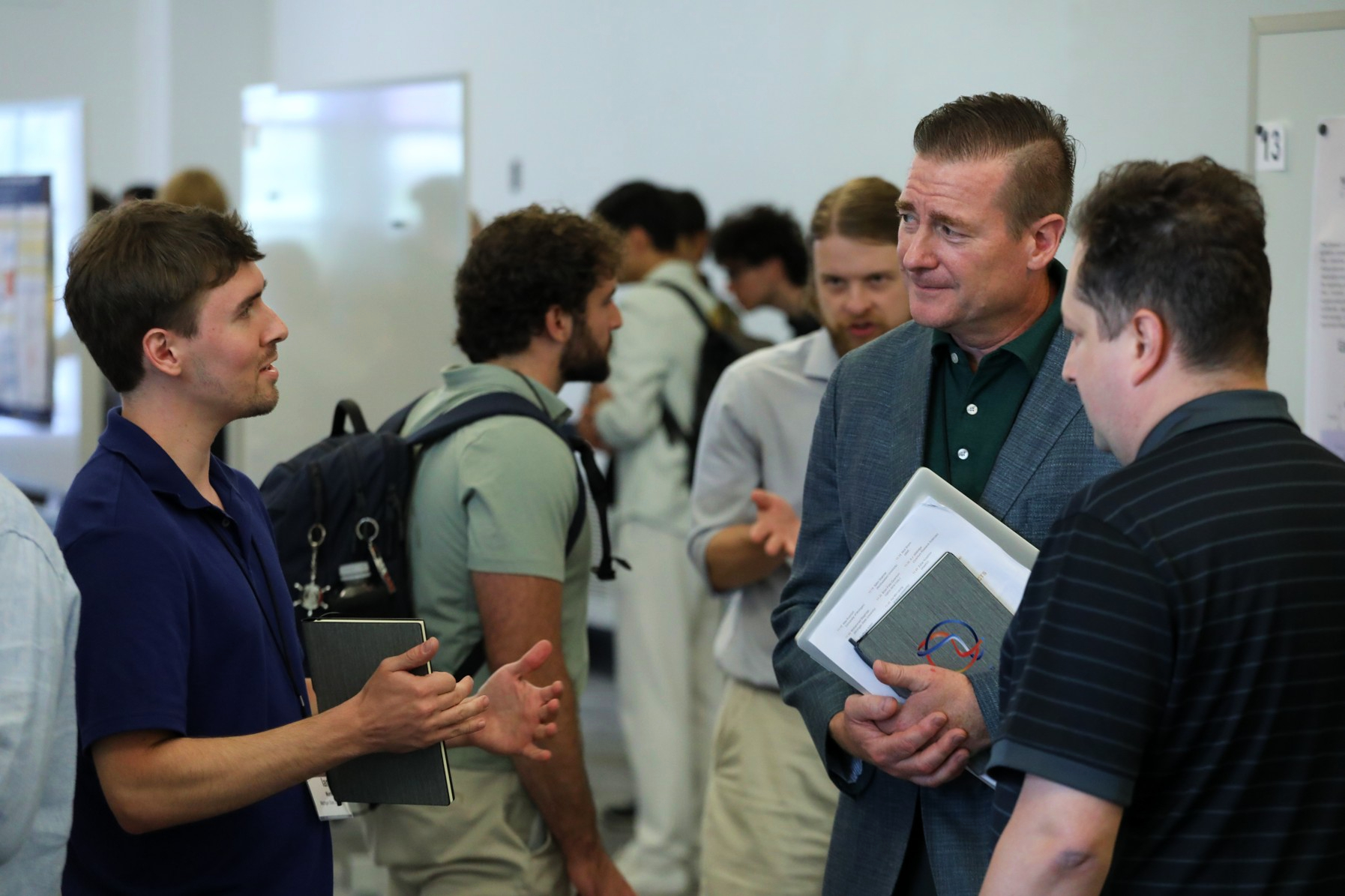
This year Purdue University hosted the Entanglement Conference, which convened MQC university researchers and administrators, leading quantum industry members and government researchers and agencies.
Mapping Groundbreaking Research and Interdisciplinary Collaboration
Entanglement 2026 drew more than 300 attendees and highlighted significant progress across several critical areas of quantum research and development. Overviews of the ongoing quantum efforts at each MQC university provided a glimpse into the research expertise, education and workforce development activities and existing major initiatives already in place. Technical talks on a variety of topics, ranging from quantum computing to materials discovery and sensing, allowed faculty, industry, and government researchers to highlight recent advancements. Breakout sessions provided an opportunity to strategize on how to better collaborate in the rapidly evolving field and position the Midwest as a leading quantum ecosystem.
“The MQC Entanglement meeting has quickly become a premier event to bring together collaborators from academia, industry and national labs from across the Midwest and beyond. It’s really great to meet up with colleagues and see all the amazing things that folks are developing and discovering. The heart of the US quantum ecosystem is squarely in the Midwest!” said Johannes Pollanen, co-director of the MSU Center for Quantum Computing and Engineering (MSU-Q). "The meeting is also a fantastic opportunity for students and junior researchers to showcase there cool results and network with potential future employers in quantum industry."
Developing a highly skilled quantum workforce was a central theme of the program, which dedicated a main-stage presentation from the MQC Student Taskforce to focus on student initiatives, alongside two poster sessions in which students and postdocs from across the Midwest presented their research to academic and industry leaders.
Expanding the Midwest Quantum Collaboratory
The addition of five new member universities significantly broadens MQC’s regional reach and deepens its collective capacity in quantum research, education, and translation. By connecting more institutions across the Midwest, the expanded collaboratory creates new pathways for shared infrastructure, coordinated research initiatives, student engagement and partnerships with industry and government. This growth strengthens the Midwest’s ability to compete for major quantum opportunities and accelerate the development of technologies with national impact.
"Welcoming Indiana University, WashU, Ohio State, UIC, and Northwestern marks an important
milestone of the Midwest Quantum Collaboratory," said Mackillo Kira, Director of MQC
and professor of electrical engineering and computer science at the University of
Michigan. "Growing from three founding institutions to eight member universities strengthens
MQC’s ability to connect regional expertise, share research infrastructure, develop
quantum talent and build the partnerships needed to position the Midwest as a national
leader in quantum science and engineering."
- Categories: