Spartan returns to lead MSU's Herbarium
In the basement of the Plant Biology Laboratories on Michigan State University’s campus, tucked inside orange floor-to-ceiling cabinets, reside over half a million pressed and mounted plants. The MSU Herbarium is an archive of plants found in Michigan and around the world, some dating back to the early 1800s.
But unless you’re a botanist, you might not even know it’s there. Dave Tank, who started in August as the new director of the Herbarium, wants to change that.
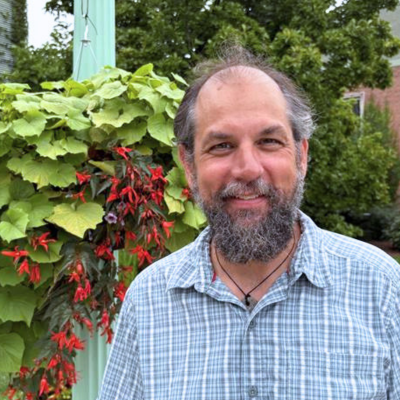
Tank joins the MSU faculty from the University of Wyoming, where he spent five years leading the Rocky Mountain Herbarium. Before that, he spent 13 years directing the University of Idaho’s Stillinger Herbarium.
Running an herbarium is about more than curating the archive of plants for Tank.
“One of the biggest things for me as an herbarium director has always been creating a community around the herbarium,” Tank said. “These collections are an opportunity to engage students, other faculty and even the public in native plant diversity, and having an active herbarium is an important way to do that.”
In addition to overseeing the herbarium, Tank will take over teaching MSU’s Plant Systematics course while also rebuilding his research lab. The plant systematist studies wildflowers called paintbrushes (Castilleja spp.), a genus of roughly 200 species. His interest is in what he calls “taxonomically challenging” plants — groups of species that are hard to distinguish due to their relatedness and tendency to hybridize.
A Spartan homecoming
For Tank, the move to East Lansing is personal as well as professional. He grew up in Traverse City, where his father taught botany at Northwestern Michigan College, and spent his summers identifying plants on Power Island. Halfway through his undergraduate program, he wanted to transfer to a school with a strong plant biology program. Michigan State was an obvious choice. He graduated a Spartan, twice — he also earned his master’s degree from MSU’s then — Botany and Plant Pathology Department — before heading west to the University of Washington for his Ph.D.
“We are thrilled to have Dave back in the Plant Biology department,” Plant Biology Chair Andrea Case said. “In addition to re-establishing his research program here, Dave brings a wealth of experience leading herbaria and connecting broad communities with plant diversity through natural history collections. His is exactly the kind of leadership and energy the MSU Herbarium needs as we continue to demonstrate the importance and value of herbaria to plant science research.”
Tank’s heart never left his home state.
“Michigan State is my team — hockey, basketball, football, all of it. I’ve always rooted for Michigan State,” he says. “I’m a Spartan, and the idea of working at a university that I have real feelings for is pretty cool.”
Today, the same strength of the plant biology program that attracted him as an undergraduate has drawn him back again. “It’s still absolutely one of the best plant biology programs around,” he said.
Why Herbaria?
At a basic level, an herbarium is an archive of plants by species, date and location. For hundreds of years, botanists have
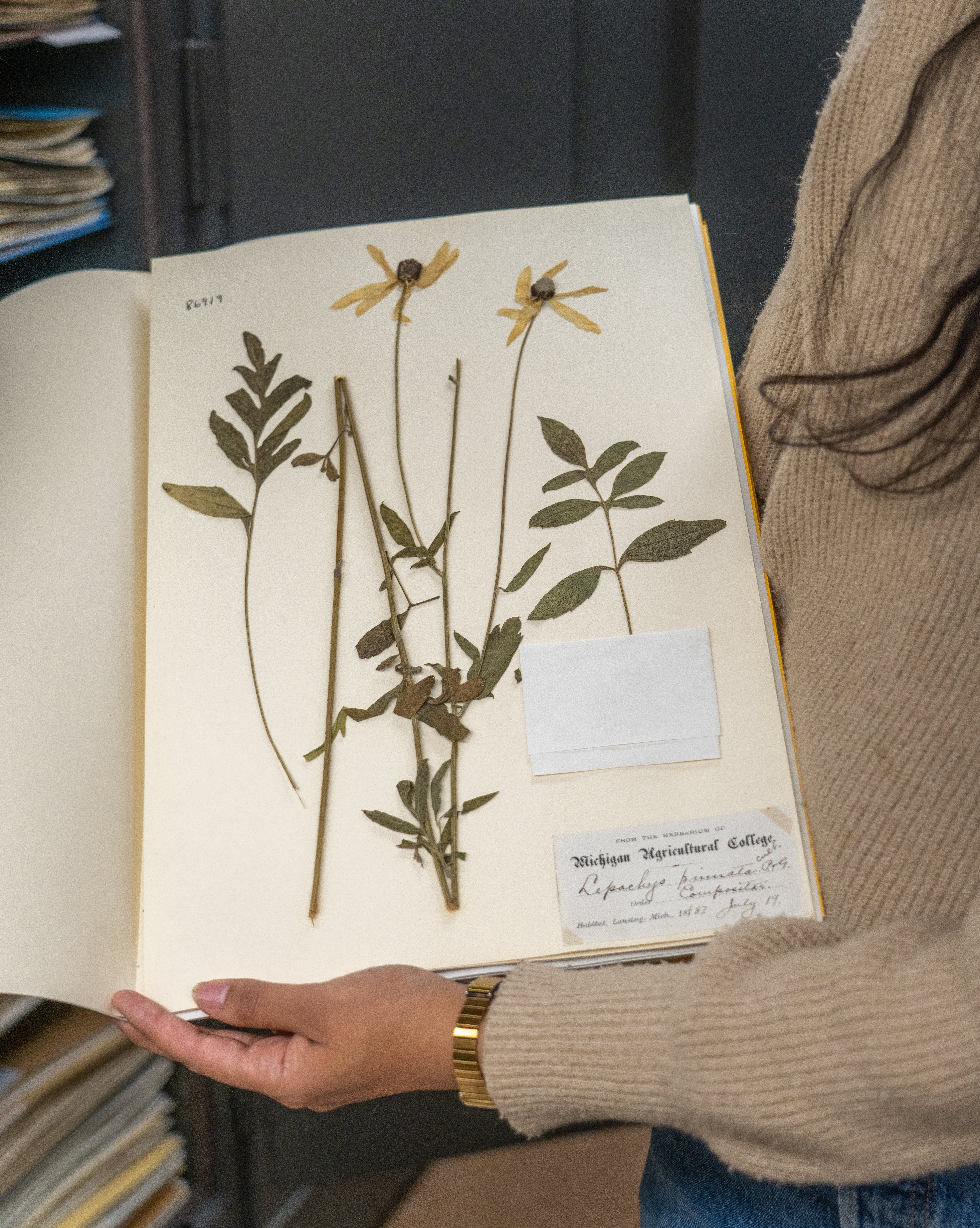
conducted a wide range of research supported by this information alone. But the usefulness of herbaria has continued to grow in ways no 19th-century botanist could ever have imagined.
Today, researchers can extract DNA from specimens, use AI imaging to measure plant traits or even X-ray specimens to quantify the amount of certain minerals inside. As technology expands, so do the opportunities an herbarium provides. “We never know what the next application is going to be,” Tank said.
Even so, Tank explained, an herbarium isn’t just for researchers. At his previous posts, he has hosted events like annual, multi-day herbarium forays where volunteers camp and collect plants together in the field, and winter identification parties where volunteers gather to identify collected specimens. “This is how communities are built,” he said.
To further support a growing community around the herbarium, Tank said, he hopes to see the collection move to a more prominent location. None of this happens without funding, and Tank is candid that part of his job now is building donor relationships with alumni who care about continuing MSU's plant sciences legacy. It's an easier case to make when people understand what an herbarium is actually for.
"It's a center for diversity that creates that community, that creates appreciation for plant diversity," he said. "That's a really important piece of what a herbarium can — and should — be doing."
—
Want to get involved? Visit the MSU Herbarium website to find volunteer opportunities and learn about other special events to come at https://herbarium.natsci.msu.edu/
- Categories: