MSU geoscientists named to 50 under 50 list
Two Michigan State University researchers were recognized for work that spans continents, disciplines and generations of scientists.
Tyrone Rooney and Jay Zarnetske, both faculty members in the Department of Earth and Environmental Sciences in the College of Natural Science, were named to the 2026 50 Under 50 list from the Geological Society of America, the Geological Association of Canada and the Sociedad Geológica Mexicana.
The annual award recognizes mid-career geoscientists across North America who are making significant contributions through research, service and mentorship. For Rooney and Zarnetske, the recognition reflects careers built around ambitious scientific questions, collaboration and a commitment to developing the next generation of geoscientists.
“I’m very happy and excited for Dr. Rooney and Dr. Zarnetske,” said Jeffrey Freymueller, chair of the Department of Earth and Environmental Sciences. “They are in great company on this list. Everyone recognized has demonstrated sustained excellence in research over many years, and their inclusion marks them as being among the best in their field across North America.”
Only a few institutions had more than one faculty member named to the 50 Under 50 list, Freymueller said, making the recognition of two EES faculty members in the same year an especially notable achievement for the department.
Tyrone Rooney: Following the clues written in Earth’s rocks
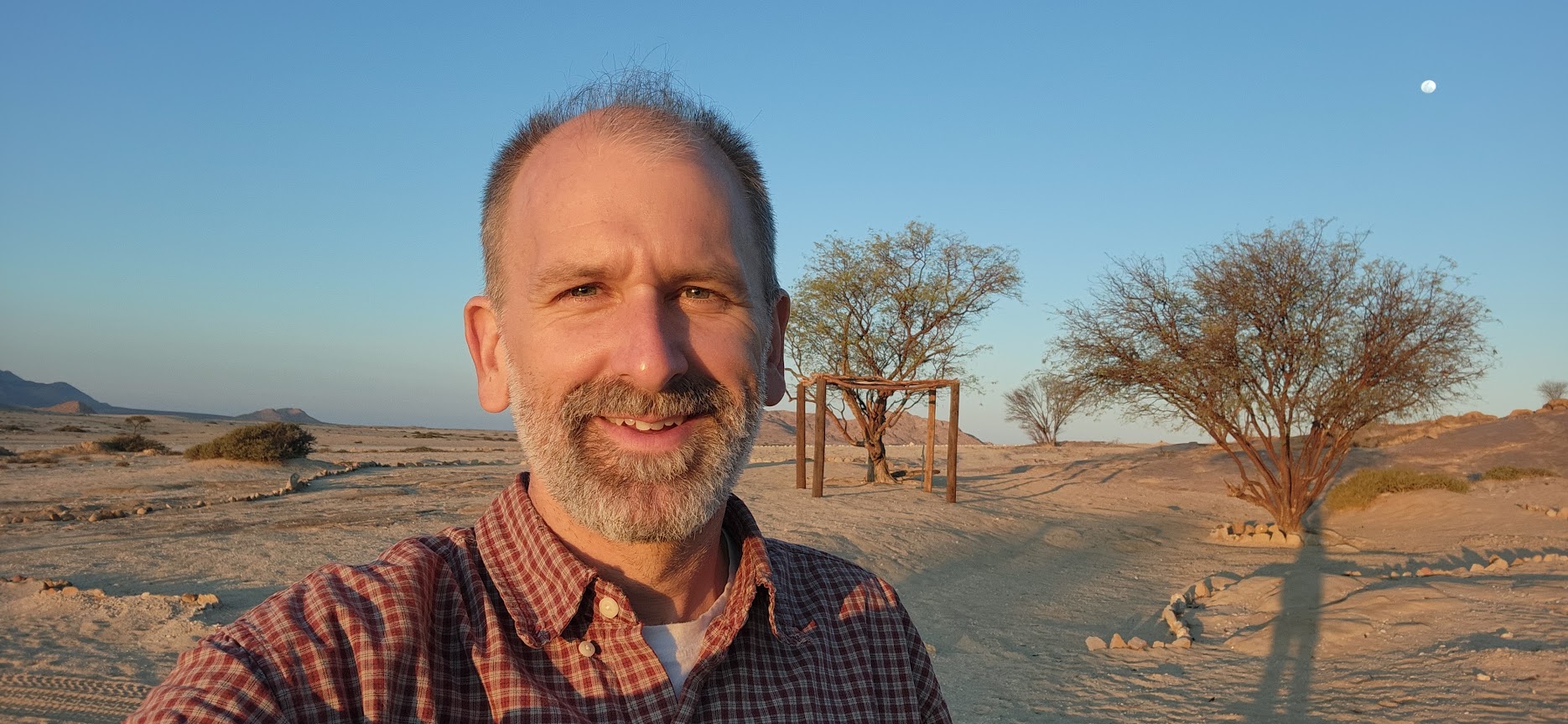
His primary research interests include the magmatism of East Africa and other continental rift environments.
For Rooney, an igneous petrologist and geochemist, the questions begin deep beneath Earth’s surface.
His research examines how magmatism records the evolution of continents, from massive volcanic eruptions and the earliest stages of continental extension to rifting and, eventually, the breakup of continents. By studying rocks and their chemical composition, Rooney looks to understand why magma forms, where it does, and what those patterns reveal about the history of Earth’s continents.
Much of his research has focused on the East African Rift, where the African continent is slowly being pulled apart. Rooney has studied the thermal and chemical structure of the mantle beneath the region, the relationship between volcanic activity and rifting, and how volcanic activity becomes increasingly concentrated as continental extension progresses.
He has also compared ancient rifts and developing continental margins in North America, East Greenland and southwestern Africa, allowing him to examine these processes across different geological settings and stages of continental breakup.
“There’s something really exciting about being able to use rocks to reconstruct events that happened millions or even billions of years ago,” Rooney said. “Every rock is giving us a piece of the story, and the challenge is figuring out how those pieces fit together to understand how continents have evolved.”
Throughout his career, Rooney has involved undergraduate and graduate students in research spanning field geology, petrology, geochemistry and analytical methods. Working alongside students has become central to how he approaches science, giving them opportunities to contribute to research while also allowing him to learn from their questions and perspectives.
That mentorship has included more than 50 students throughout his career, and Rooney sees conversations about what comes next as an important part of the relationship. Sitting down with students to talk through potential career paths, he said, can be just as valuable as helping them develop technical research skills.
“Science is a collaborative process,” Rooney said. “I’m constantly learning from the people I work with, and that includes my students. They bring new questions, new ideas and new ways of looking at problems.”
That work extends into the broader geoscience community through Rooney’s leadership in the American Geophysical Union, editorial work, scientific programming and conferences, and initiatives supporting students and early-career researchers.
Jay Zarnetske: Tracing the paths of water
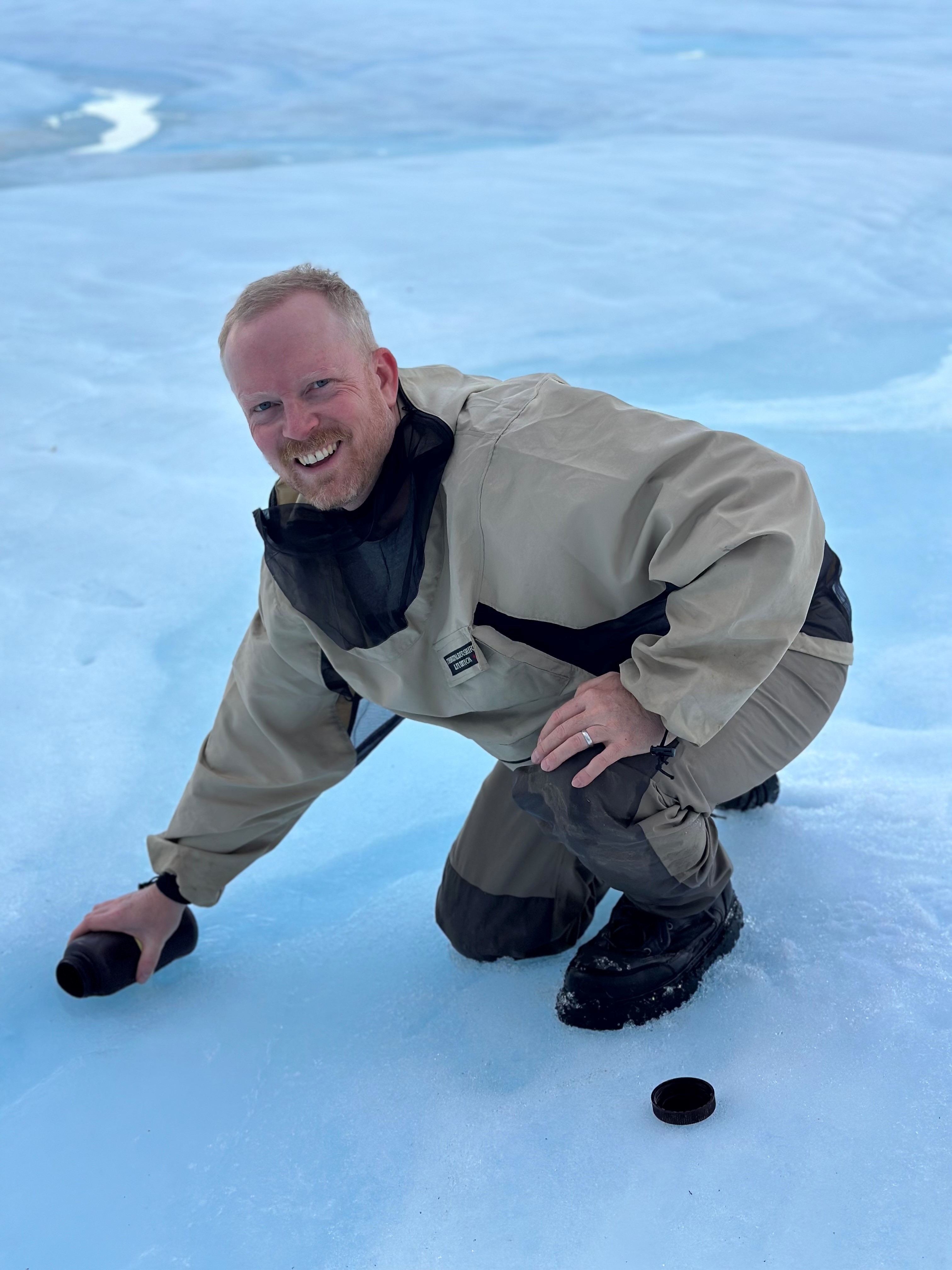
His research group is interested in how hydrologic processes and aquatic ecosystems respond to climate and land use change.
A watershed scientist and professor, Zarnetske studies how water moves through landscapes and how those movements influence aquatic ecosystems. His research examines questions such as where water goes when it rains, which pathways it takes through a watershed, how long it takes to reach a stream and, ultimately, what all of those answers can tell us about the planet.
“The world around us is changing so fast, from our backyards to the distant Arctic,” Zarnetske said. “We’ve been pioneering ways to use streams and rivers as sensors of that change. Water connects many of these changes and carries those signals with it, allowing us to document how the world is changing and uncover things we wouldn’t otherwise be able to see.”
Those questions have taken Zarnetske and his collaborators around the world, including research on Arctic and permafrost-influenced stream ecosystems. He has contributed to more than 70 publications and hundreds of presentations, while working with scientists, educators and policymakers across disciplines and countries.
He recently helped lead an international team that helped change how one of Earth’s important planetary processes,the global water cycle, is depicted and taught.
“Some of the most interesting questions we face don’t fit neatly within one discipline or one community,” Zarnetske said. “The only way to make progress is to bring different perspectives together and work across those boundaries.”
His expertise in water has also allowed him to contribute to conversations that extend beyond scientific research and into policy and decision-making.
“By understanding how water is stored and moves through the environment, we can contribute to complex questions involving science and policy,” said Zarnetske. “We get to connect what researchers learn in the field with decisions that affect communities and ecosystems.”
His lab brings undergraduate and graduate students directly into the field, from local Michigan streams to remote Arctic permafrost sites, giving early-career scientists hands-on experience deploying sensors, analyzing geochemical data and publishing peer-reviewed research.
Building the future of geoscience
Rooney and Zarnetske study different parts of Earth’s complex systems, but both have built careers around asking ambitious questions and bringing people together to answer them.
Together, they represent the breadth of research in Earth and Environmental Sciences at MSU, while their work with students, collaborators and the broader geoscience community is helping shape the field for the next generation.
- Categories: