How Spartans helped power a Nobel Prize-winning discovery
From Antarctic ice to groundbreaking neutrino research, MSU physicists have helped open a new window to the universe
When a physicist set out to build a neutrino telescope under Antarctic ice, two scientists who would eventually call Michigan State University home joined the effort.
They traveled to the frozen expanse at the bottom of the world, helping install and maintain instruments designed to detect tiny, ghostlike particles called neutrinos. Years later, as MSU faculty, they brought their expertise to East Lansing, where they continue to advance the observatory’s scientific mission.
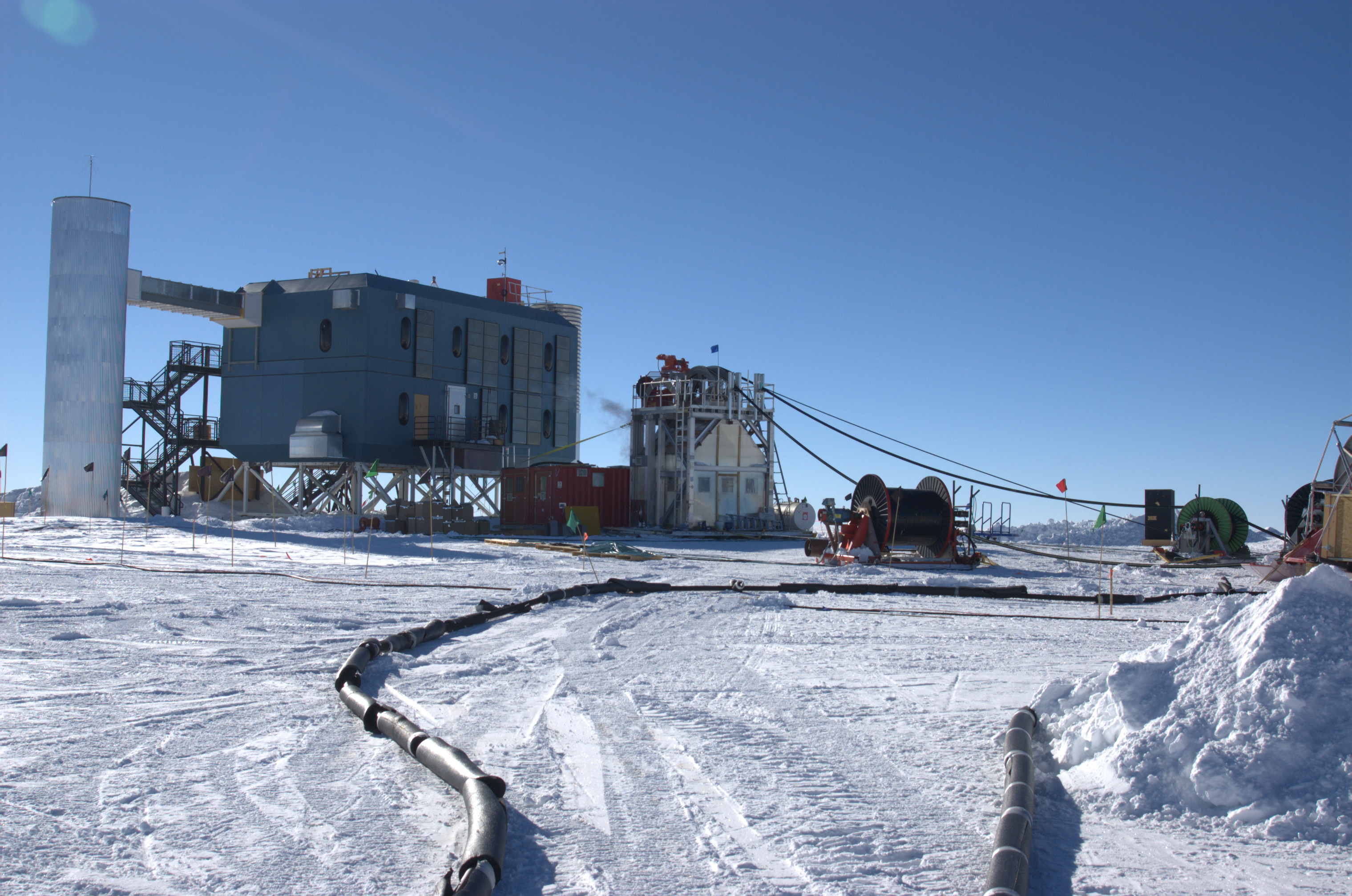
The IceCube Neutrino Observatory has been a mainstay of MSU’s physics program since 2014. When it was time for an observatory upgrade, MSU researchers assembled and tested highly sensitive light-detecting modules, and they prepared the long cables needed to connect instruments buried deep in Antarctic ice.
So when the project’s principal investigator, Francis Halzen, won the Nobel Prize this month, it was a cause for celebration at MSU too.
Professor Tyce DeYoung and Associate Professor Nathan Whitehorn, both from the Department of Physics and Astronomy, have spent most of their careers trying to solve the mysteries of where the universe’s highest-energy particles come from. Both are heavily involved in IceCube and have written papers on key discoveries from the observatory.
Today, MSU’s IceCube team also includes physics and astronomy faculty Mehr Un Nisa, Kirsten Tollefson and Shuo Zhang. Together, the researchers are helping advance the observatory’s mission to uncover the origins of high-energy neutrinos.
The possibility of a Nobel Prize lurked in the back of their minds, but they were stunned when they awoke to the news.
“It was reasonable enough that it was not shocking,” Whitehorn said, “but it was unlikely enough that it was a big surprise.”
DeYoung and Whitehorn were first connected with IceCube while studying at the University of Wisconsin – in fact, Halzen advised both throughout their respective graduate school journeys. Both were intrigued by the wild idea of using ice to detect neutrinos.
The problem with detecting neutrinos from the cosmos is they can move through matter without interacting with it. They’re also hard to find among the enormous amounts of other particles produced in the atmosphere.
“It’s a needle in a haystack kind of problem,” DeYoung said. “Except it’s a needle in some haystack, somewhere in the Midwest.”
In 2013, Whitehorn led a study that helped establish one of IceCube’s most important discoveries. After two unusually energetic neutrinos, nicknamed Bert and Ernie, were identified in IceCube data, Whitehorn and his colleagues searched for similar events.
They expected to find about seven caused by interactions in Earth’s atmosphere. Instead, they found 28 – compelling evidence that IceCube was detecting neutrinos from beyond our planet.
The discovery helped launch a new era of astronomy, allowing scientists to study distant cosmic environments using particles rather than light alone.
Below ice
To detect high-energy neutrinos, scientists need enormous volumes of transparent material, such as water. The material provides opportunities for neutrinos to interact while helping shield the detector from other particles that could overwhelm their signals.
For decades, scientists have hypothesized that the best place for a neutrino detector was the bottom of the ocean. But engineering waterproof detectors was a nightmare, and finding ships and submersibles to construct a detector underwater was a logistical problem.
So Halzen suggested an alternative: ice.
At first glance, Antarctica seems like the most difficult place imaginable to run a neutrino observatory. But Halzen realized the solid ice solved the engineering problems they’d faced with water.
The idea stuck, and eventually, scientists converged in Antarctica to deploy sensors inside glass pressure vessels.
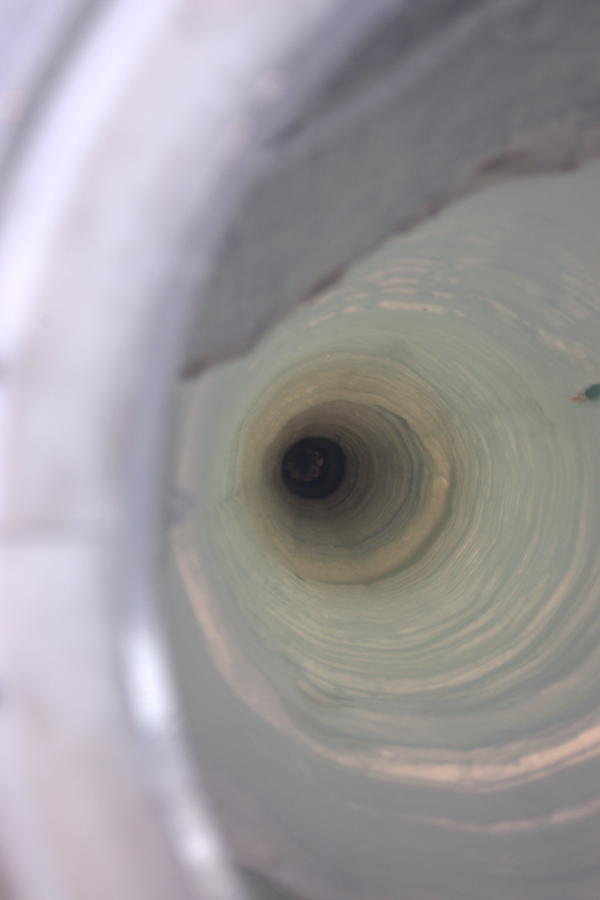
Instead of drilling through miles of ice, scientists melt tunnels into the ice with a hot water hose heated by burning jet fuel.
“It doesn’t sound like the cheapest way, but in fact, at the South Pole, it is,” DeYoung said. “The fuel has to be brought in on sleds, and jet fuel gives you the most concentrated energy you can find.”
At the bottom of the world
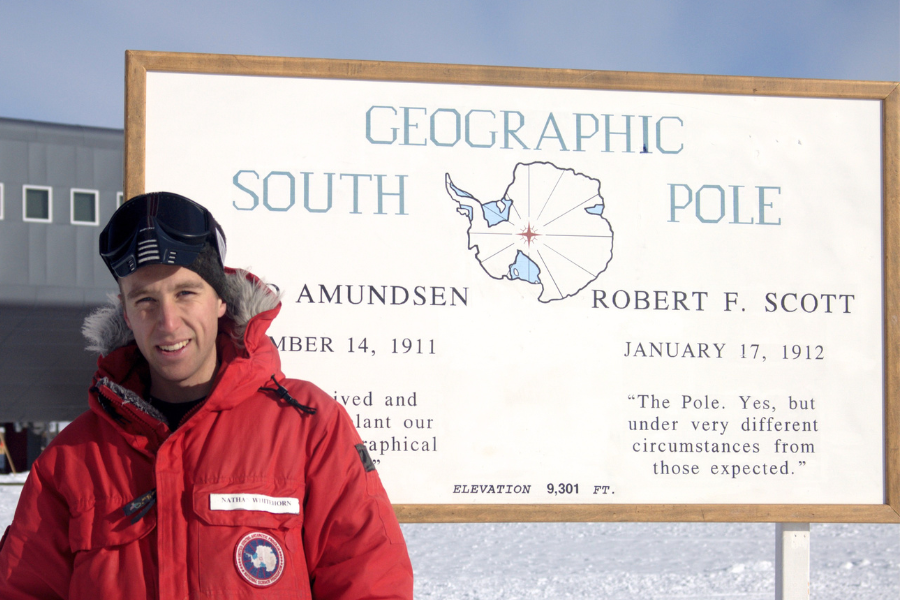
The observatory was built at the National Science Foundation’s Amundsen-Scott South Pole station, the world’s southernmost research station. With its snowy, windswept setting, it’s reminiscent of the planet Hoth in Star Wars: The Empire Strikes Back.
DeYoung and Whitehorn have both trekked to the South Pole observatory. It’s a weekslong ordeal that’s weather-dependent – it isn’t unusual to show three weeks after their projected arrival date due to delays.
Since the beginning, their goal has been to identify the distant cosmic source producing high-energy neutrinos. They can be produced when cosmic rays interact with matter, including in the atmosphere. But just where the highest-energy cosmic rays are created is still a mystery. Scientists have proposed sources such as supermassive black holes and gamma-ray bursts, but no single source has definitively explained how particles can be accelerated to such extreme energies.
When cosmic rays hit the atmosphere, they produce showers of particles with extraordinary energy. The highest-energy cosmic rays observed carry about 100 million times the energy produced in the world’s most powerful particle collider. They leave a trail of particles behind them, but cosmic rays are electrically charged, so magnetic fields bend their paths, making it difficult to trace them back to their sources.
Neutrinos, however, aren’t electrically charged so magnetic fields don’t bend their paths. They travel in nearly straight lines, allowing scientists to trace them back toward the powerful cosmic events that produced them.
IceCube is helping scientists get closer to solving this mystery by meticulously mapping each neutrino it detects – by now, it’s spotted thousands. Each one points to sources that scientists can’t quite understand yet. They offer researchers their first glimpse at high-energy environments from across the universe, far beyond what we can see in the night sky.
“That’s the reason for the Nobel Prize,” Whitehorn said. “For the first time, we can see the thing, even if we don’t know what we’re seeing yet.”
While DeYoung and Whitehorn haven’t made the trek to Antarctica in some time, they put their energy toward building equipment and mentoring students who make the journey. They’re driven by possibility, by the belief that each day of observation is another step toward understanding the birthplace of neutrinos.
To Whitehorn, the mystery is as fundamental as understanding the lights in the night sky.
“It’s pure curiosity,” he said. “But I think we would be remiss as a species if we just noticed lights in the sky and moved on with our lives.”
- Categories: