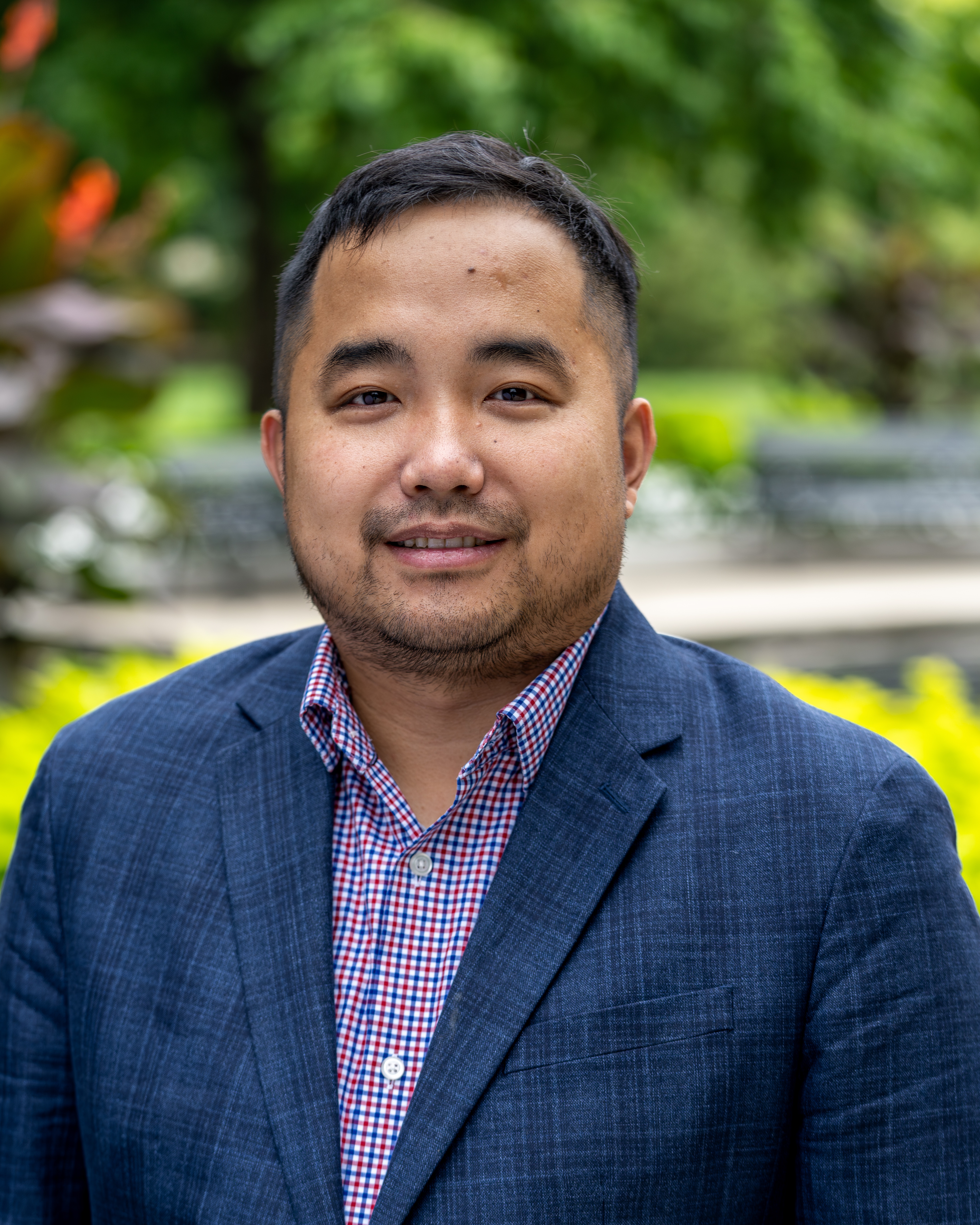
Dr. Guanyu Hu
Bayesian Nonparametric Clustering with Feature Selection for Spatially Resolved Transcriptomics Data
Associate Professor, Department of Statistics & Probability
huguanyu@msu.edu
“Without location, biology is a phone book. With location, it becomes Google Maps.”
For decades, genomics has revealed which genes are active within a tissue sample — but often without knowing where those cells are located. Guanyu Hu’s research uses Spatially Resolved Transcriptomics to add “GPS coordinates” to gene activity, transforming a static list into a living biological map.
If a tissue sample is like a crowded city, traditional genomics tells us who lives there. Spatial transcriptomics shows which neighborhood they inhabit, who their neighbors are, and how they interact. In diseases such as cancer, location can change everything: immune cells positioned at a tumor’s edge tell a different story than those buried deep within it.
Hu develops Bayesian nonparametric clustering methods that allow the data itself to determine how many distinct tissue regions or cell populations exist — rather than imposing a fixed number in advance. Instead of drawing artificial borders, his approach lets biological structure emerge naturally. Bayesian thinking also enables researchers to quantify uncertainty and update conclusions as new data becomes available — an essential feature in complex, noisy biological systems.
The mathematics behind these models connects fields in surprising ways. Just as sports analysts map player positions and shot density on a basketball court, Hu maps gene expression patterns across tissue space. In both cases, location changes meaning.
Through vivid spatial maps that resemble weather radar for biology, this presentation offers a glimpse into the future of precision medicine — where diseases like cancer may be understood not as uniform masses, but as ecosystems shaped by spatial organization.