Sean Crosson
Many Microbes, One Health: Bacteria at the Interface of Animal, Plant, and Human Health
Rudolph Hugh Endowed Professor, Department of Microbiology, Genetics, and Immunology
crosson4@msu.edu
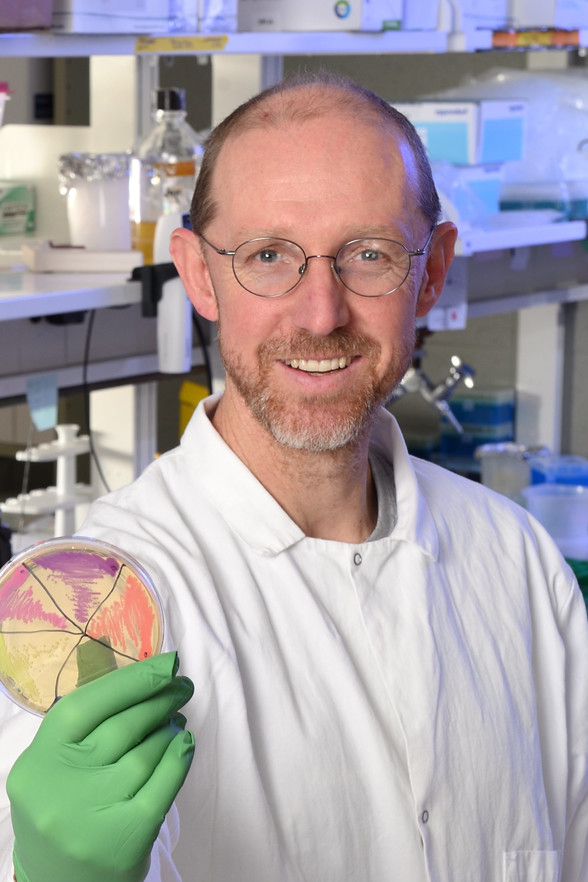
When we think of microbes, we often default to infection and illness. Sean Crosson invites us to consider a different set of job titles: global maintenance crew, or essential support staff. In this session, he explores the “invisible infrastructure” of microbial life that impacts animal, plant, and human health.
“Not all microbes are bad — life on Earth wouldn’t work without them.”
Drawing from research at Michigan State University, Crosson will highlight examples that span this One Health continuum. He will discuss Bacteroides fragilis, a common resident of the human gut that helps us break down dietary carbohydrates but can also cause disease; Brucella, a bacterial pathogen responsible for major livestock losses worldwide; and Caulobacter, a soil bacterium that collaborates with other microbes to support crop health during drought.
Though Brucella and Caulobacter are related, they occupy vastly different environments and have distinct biological roles. Brucella is an intracellular pathogen capable of surviving and replicating within animal host cells, causing disease, while Caulobacter thrives in as a free-living, non-pathogenic bacterium. Crosson’s lab has identified Caulobacter genes that support beneficial interactions with nitrogen-fixing bacteria in soybean roots, which are important for soybean health and seed production, as well as Brucella genes required for animal infection. These discoveries provide useful genetic targets for improving crop productivity and for understanding or disrupting bacterial pathogenesis.
Attendees will see how microbes support nutrient and energy flow between organisms and within ecosystems. From soil to livestock to the human body, bacteria operate at the interface of life’s shared biological building blocks.
The takeaway is simple but profound: microbes do far more than cause disease. They connect systems, sustain agriculture, influence health across species, and offer opportunities for innovation in agriculture and medicine. Understanding them means understanding how life itself works.