The science behind career exploration
Few decisions feel bigger in college than deciding what comes next. For many science students, choosing a career can feel overwhelming, especially when the advice they're given is simply to "follow your passion."

Christina Igl, career education specialist in Michigan State University's College of Natural Science, has a different idea.
Treat it like a science experiment.
Rather than treating career decisions as something students discover through intuition, Igl encourages them to form hypotheses, gather evidence and learn through experience. An internship, undergraduate research project, study abroad program or volunteer opportunity isn't just another line on a resume. It's a data point that helps students create a career path aligned with their values, goals and vision for the future.
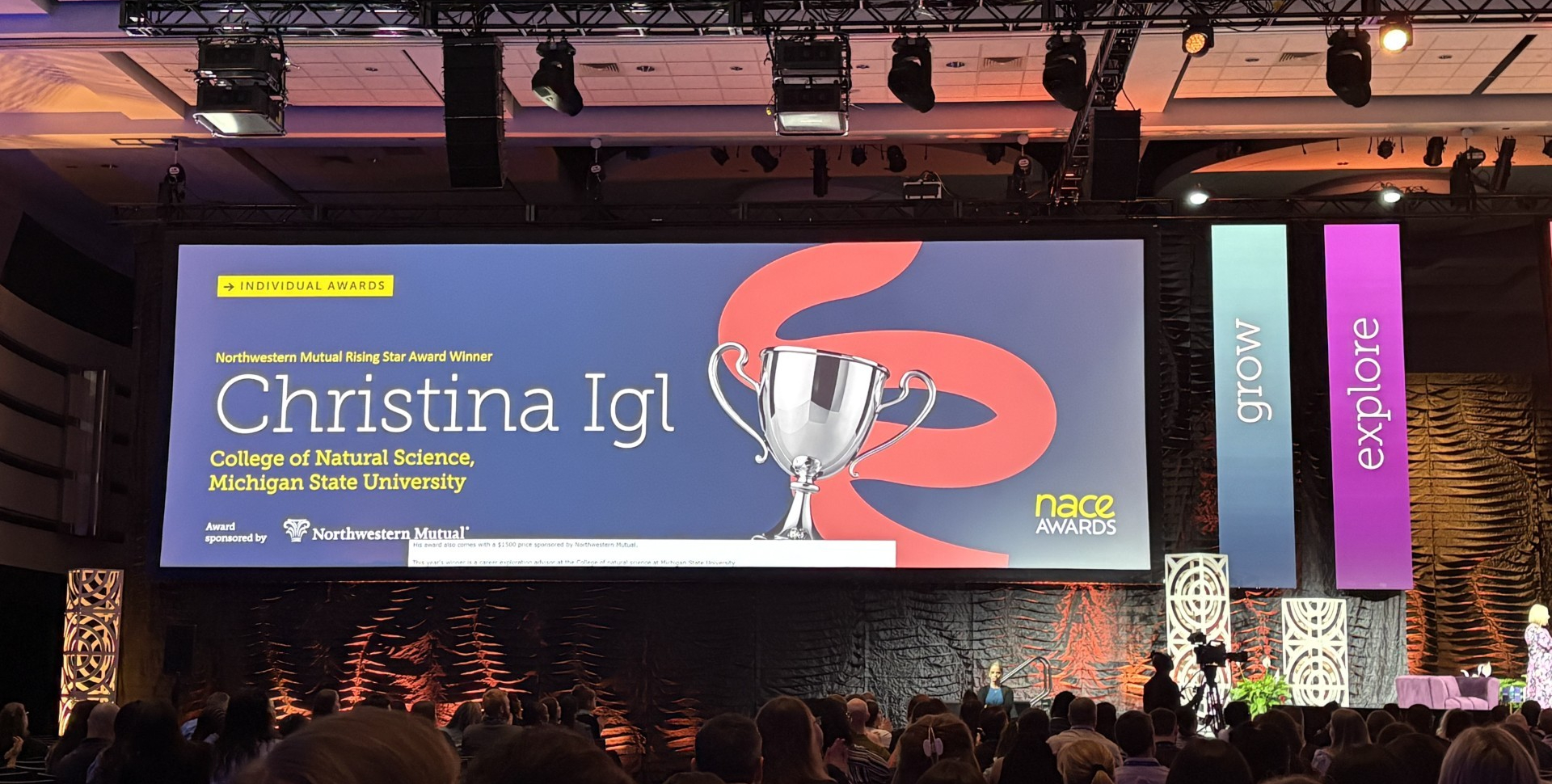
This career education model has positioned the College of Natural Science as a national leader in science-specific career education and earned Igl national recognition. This summer, she received the National Association of Colleges and Employers (NACE) Rising Star Award, the organization’s premier recognition for emerging leaders in career services. Chosen as the sole recipient through a national nomination and committee selection process, she was honored for her leadership potential and innovative contributions to the profession.
The recognition honors Igl's work developing the frameworks, resources and programming that have transformed career education across the college. By helping students approach career planning with the same curiosity and structure they bring to scientific discovery, she's made career development a more intentional, accessible and empowering part of the student experience.
The award was presented during NACE’s annual conference in Denver, Colorado, where more than 2,200 career services and early talent professionals gathered from across the country. But for Igl, the recognition represents more than individual achievement. It reflects the impact of a career education experience intentionally designed around the unique needs and mindsets of science students.
Speaking the language of science majors
Igl's own career path wasn't linear.
Her background spans the arts and humanities, K–12 education, AmeriCorps service and higher education, developing her unique perspective on how people, systems and opportunities connect. Her master’s degree in student affairs administration and MBA expanded that perspective, combining student development theory with a strategic approach to building resources, communicating ideas and ultimately creating impact.
"When I came into this role, I wasn't just thinking about helping one student at a time," Igl said. "I was thinking about how we build something that reaches students at scale."
When she joined the College of Natural Science’s Career and Experiential Learning team, she noticed that passive, traditional career advice often didn't resonate with science students. They weren't looking for abstract encouragement to "do what you love." They wanted a process.
So instead of asking students to make high-stakes career decisions based on instinct, Igl set out to build a comprehensive career education model that reflected how they already learn and think.
Drawing from career development theory, educational research and principles of scientific inquiry, Igl developed a series of interconnected career frameworks that guide students to evaluate opportunities, reflect on experiences and make informed decisions over time. The Career Formula, Career-Ready Cycle and a Four-Phase Career Planning Framework work together to transform career development from a single decision, into an ongoing process of observation, experimentation and refinement while building the professional competencies needed for careers in science.
Just as importantly, Igl has worked to make career education easier to access.
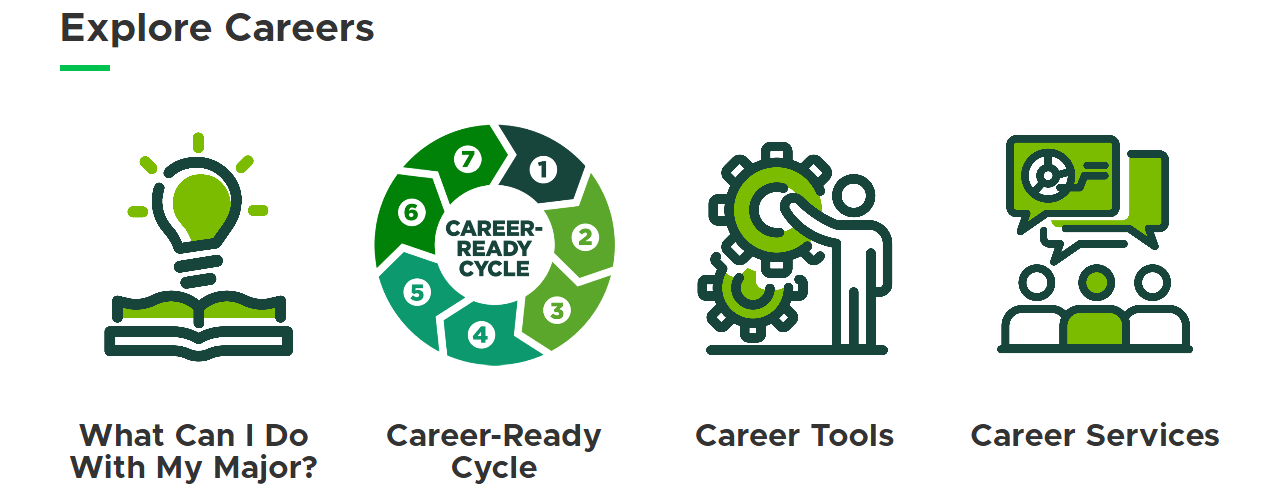
She has created multiple entry points for career education throughout the undergraduate experience, from Career Orientation on day one, to a week long job search strategy workshop for graduating seniors. She builds tools and resources distributed through a biweekly newsletter that consistently reaches thousands of students and she continues building a resource library of workshops, lessons and exercises for students to access 24/7.
"I don't want students to have to stumble across these resources," Igl said. "The goal is to make career development unavoidable and integrated from the very beginning of their time on campus."
Another key part of that work is making the "hidden curriculum" of careers visible, the unwritten expectations that often determine professional success but are rarely taught explicitly. Whether helping students navigate networking conversations, approach faculty about research opportunities or understand workplace expectations, Igl aims to make those invisible rules accessible to every student.
“It is not an exaggeration to say Christina has revolutionized career exploration within the College of Natural Science,” said Sarah Whitaker, director of career and experiential learning. “Before she arrived, the college had no structured career education strategy or curriculum. Christina built one from the ground up, and linked curriculum and career for an integrated student experience.”
Learn more about NatSci’s Career and Experiential Learning office.
- Categories: